
 Business License

Which carbon steel grade should I specify for machete blades?
Which carbon steel grade should I specify for machete blades?
Most machete quotes mention a steel grade in passing. Few explain what the number changes in the field.
1055, 1065 and 1075 are plain carbon steels. They differ mainly in carbon content, and that difference decides how a blade behaves.
Pick the wrong one and your customers will report a blade that dulls fast, or one that chips on dry wood.
This guide explains the trade-off in plain terms and shows how to put it into a purchase order.
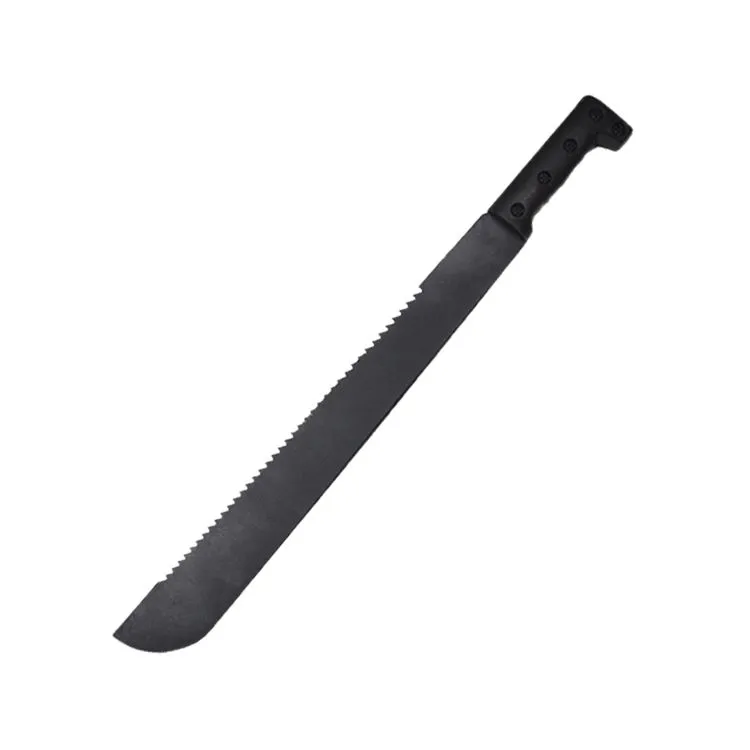
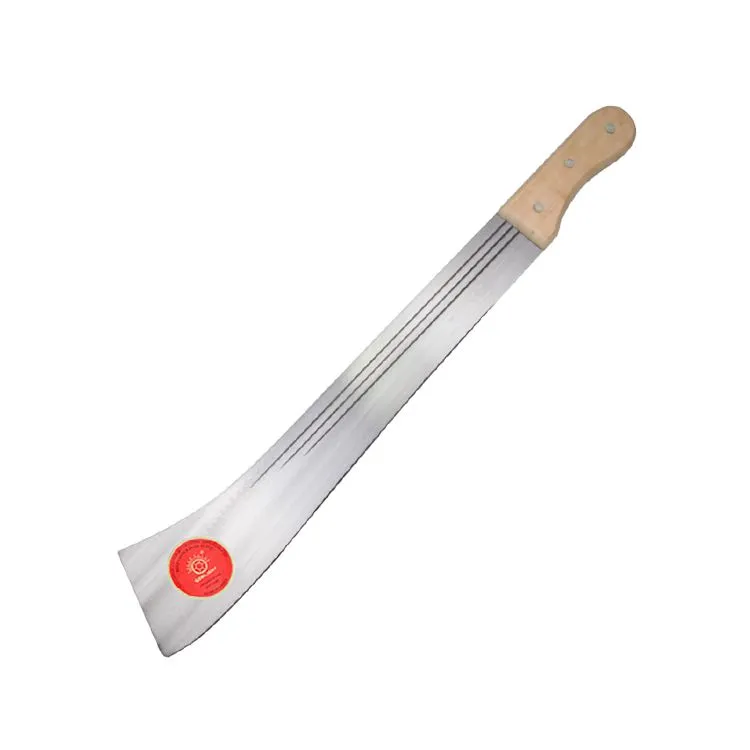
How do the three grades differ in hardness and toughness?
The last two digits are the carbon content. 1055 holds about 0.55 percent carbon, 1065 about 0.65, and 1075 about 0.75.
More carbon means the steel can reach a harder edge after heat treatment. It also means less tolerance for mistakes.
1055 is the toughest of the three. It bends before it breaks, and it forgives rough use and poor sharpening angles.
Its weakness is edge holding. On abrasive grass and sandy soil, it dulls sooner than the harder grades.
1065 sits in the middle. It takes a decent edge and still absorbs impact, which is why it appears in many general purpose blades.
1075 reaches the highest hardness of the three. It holds an edge well on clean cutting and resists wear.
It is also the least forgiving. A 1075 blade with a thin edge and a hard temper will chip on knots and dry bamboo.
Hardness is set by tempering, not by the grade alone. The same 1075 can be tempered soft or hard.
That is why a hardness figure should always appear next to the grade in a quote.
Ask for a hardness map across the blade, not one number. Edges and spines often differ after grinding.
Too much heat at the grinding stage softens the edge, even when the furnace work was correct.
Which grade suits cane versus brush work?
Match the grade to what the blade hits, not to what the catalogue calls premium.
For sugar cane and soft green stems, choose a grade that takes a keen edge and can be filed in the field.
1065 works well here, with a thin blade and an acute edge. Some estates prefer 1055 for its forgiveness.
For palm fronds, banana stems and mixed farm work, 1065 again covers most needs.
For brush, dry branches and hardwood, 1075 with a steeper edge and a thicker spine makes sense.
In that use, the blade hits knots and soil. Wear resistance matters more than flexibility.
For tenders and aid supply, 1055 or 1065 with a mid range hardness is safer. These tools are abused by untrained users.
For premium retail brands, a 1075 blade with a well controlled temper supports a higher price and a sharper story.
Never let a supplier sell you 1075 as automatically better. Harder is only better when the job is clean cutting.
Sand and soil blunt any edge. In sandy fields, edge geometry matters more than the grade.
How should heat treatment be written into the PO?
Write it as a process requirement with numbers, not as an adjective.
State the steel grade and the mill source. Then state the hardening and tempering steps in order.
Ask for the austenitising temperature range, the quench medium, and the tempering temperature range.
Then set the acceptance hardness as a range, for example 48 to 52 HRC, measured on a defined point of the blade.
Define where to measure. Ten millimetres behind the edge and twenty millimetres from the tip is a repeatable spot.
Ask for the test method. A bench Rockwell tester gives a number. A file test gives an opinion.
Request hardness results from three pieces per batch, and keep the records with the shipment.
Add a bend or impact test if your market is hard on tools. State the pass limit clearly.
Finally, require that any change of steel source is notified in writing before production.
Keep a signed heat treatment record per batch. When a claim arrives, that record decides the conversation.
Ask for the furnace chart or the tempering colour, not just the final hardness number.
Ask whether the plant treats blades in house or sends them out. Outside treatment adds lead time and risk.
What about 65Mn and other common grades?
Chinese plants often quote 65Mn, a manganese spring steel with around 0.65 percent carbon.
It behaves close to 1065 but offers better hardenability, which helps in thicker sections.
It is widely available and reasonably priced, and it is a sound choice for general machete production.
Some suppliers offer 1045 for very low cost lines. Expect a softer blade with shorter edge life.
Stainless grades appear in retail gardening lines. They resist rust but usually cost more and hold a different kind of edge.
Ask what the grade actually is, not what it is called. Trade names vary between factories and regions.
Request a mill certificate or a spectrum analysis result for the batch. A serious plant will have both.
Steel and heat treatment RFQ checklist
Put these lines in your inquiry and compare the answers side by side.
Steel grade, standard and mill source
Mill certificate or spectrum analysis for the batch
Hardening temperature range and quench medium
Tempering temperature range and number of cycles
Acceptance hardness range in HRC, with the measuring point defined
Test method and number of pieces tested per batch
Bend or impact test requirement and pass limit
Blade thickness and edge angle matched to the grade
Surface finish and any decarburisation limit
Price at three volumes for the same grade
Notification rule for any change of steel source
Records supplied with each shipment
A grade name is a starting point. The tempering behind it is what your customer actually feels in the field.
Recently Posted
-
Wood or plastic handle: which machete handle do buyers reorder?
October 22, 2026Wood or plastic handle: which machete handle do buyers reorder?Handles are the cheapest part of a machete and the most common reas Read More
-
How do I choose machete blade length, thickness and edge angle for each task?
October 22, 2026How do I choose machete blade length, thickness and edge angle for each task?Three numbers decide how a machete performs. Length, Read More
-
Forged or stamped machete blades: which one lasts longer in the field?
October 22, 2026Forged or stamped machete blades: which one lasts longer in the field?Every supplier will tell you their blade is forged. Some of Read More
-
What is a cane knife, and why can't a standard machete replace it?
October 22, 2026What is a cane knife, and why can't a standard machete replace it?A cane knife looks like a machete that someone cut short and Read More

Contact Us
Recommended Products
-
 Heavy Duty Cane Knife Machete for Wholesale Buyers Factory Direct Export for Rural Agricultural Projects Durable Hand ToolNegotiableMOQ: 1200 Pieces
-
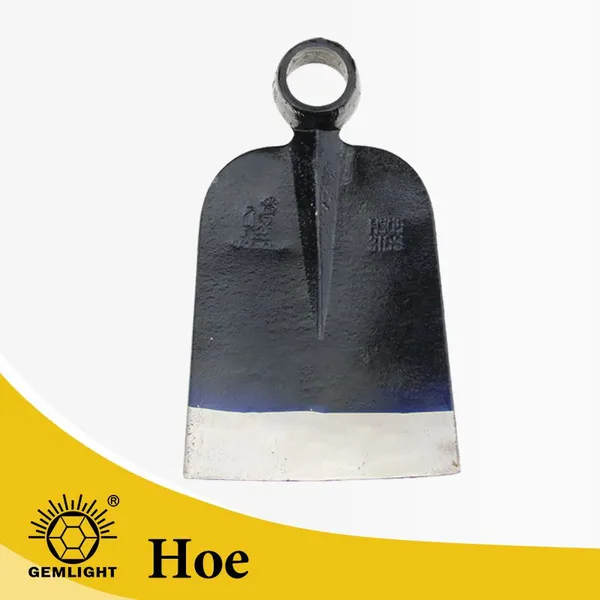
Agricultural Hoe Head Garden Rail Steel Tool for Tough Soil Cheap Price Hand ToolsUS$ 1.07 - 1.27MOQ: 1200 Pieces
-
Sturdy Rail Steel Hoe for Weeding, H305 Perfect for Agricultural and Garden TasksUS$ 1.07 - 1.27MOQ: 1200 Pieces
-
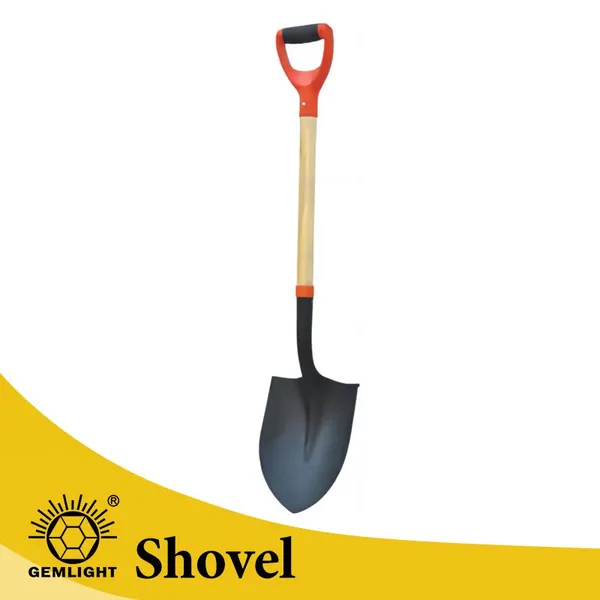
Heavy Duty Manganese Steel Garden Shovel Round Point Digging Shovel With Wooden Handle Farm Tool SupplierUS$ 2.14 - 2.36MOQ: 1200 Pieces
-
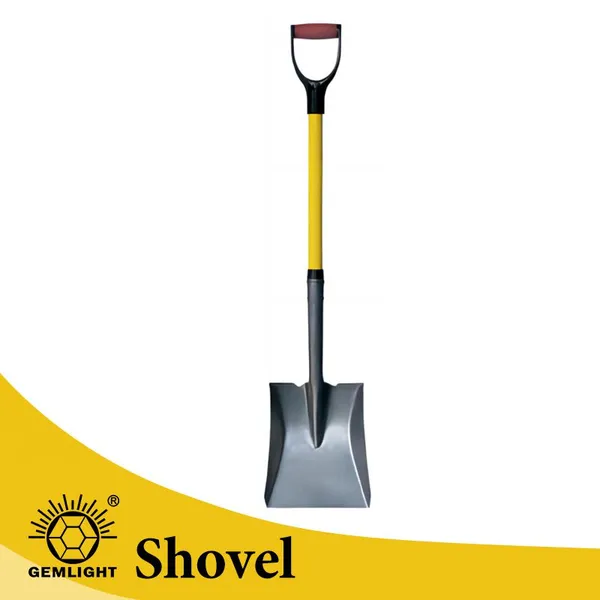
Big Shovel Wide Shovel Mud Shovel Heavy Duty Steel Blade for Farm Drainage Soil Moving Cleaning and Landscaping UseUS$ 2.14 - 2.36MOQ: 1200 Pieces
-
Strong Teeth Soil Rake for Farm Tool Suppliers Private Label Export for Farm Maintenance African Distribution Factory Bulk OrderUS$ 0.88 - 1.35MOQ: 2000 Pieces
-
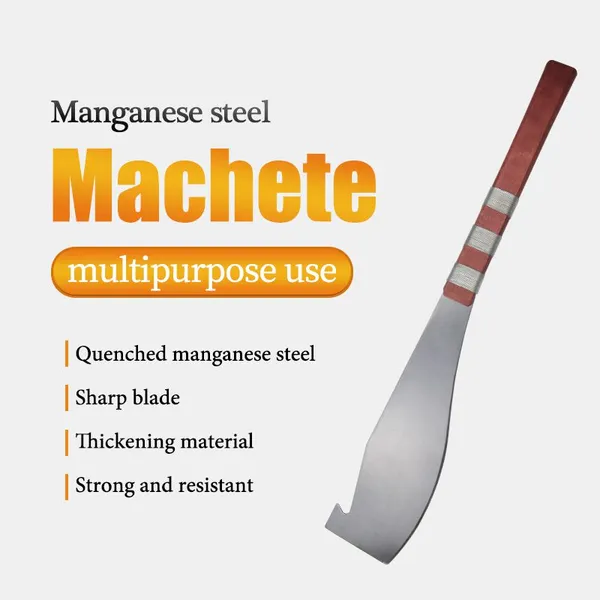
Manual Cane Knife Machete for Wholesale Buyers Factory Direct Export for Rural Agricultural Projects Durable Hand ToolNegotiableMOQ: 1200 Pieces
-
Large High Carbon Steel Machete Knife Agricultural Machete for Farming Bush Cutting Garden Tool SupplierNegotiableMOQ: 1200 Pieces
-
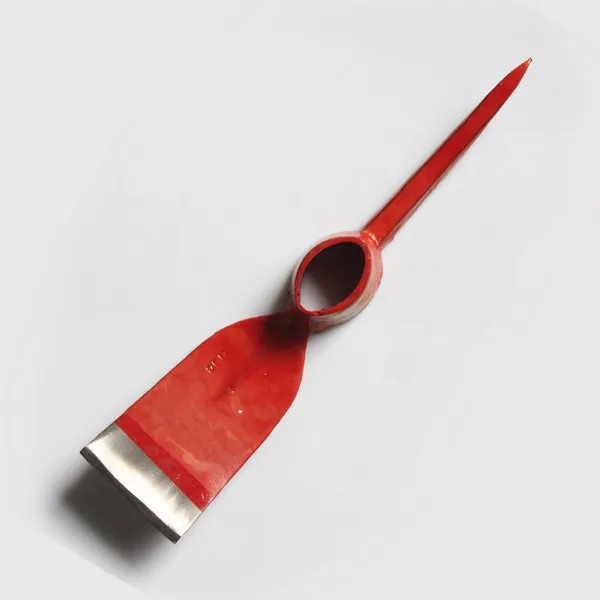
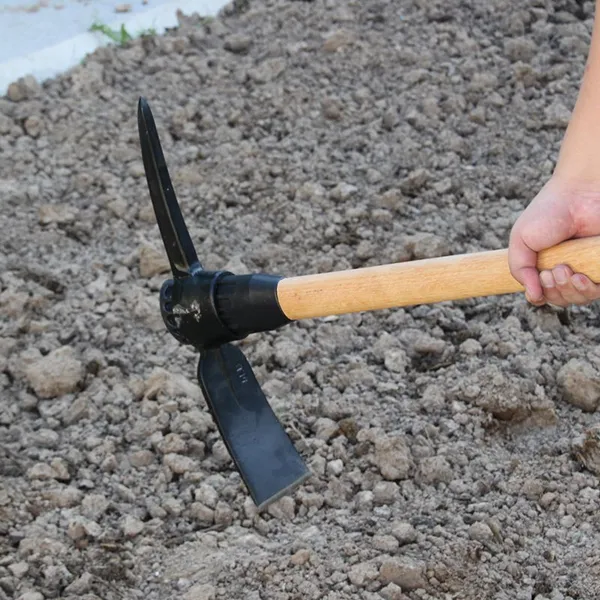
Wholesale Heavy Duty Pick Mattock for Mining Road Work and Farm Digging for Wholesale Tool Dealers With Bulk Order ServiceUS$ 1.85 - 2.3MOQ: 1200 Pieces
-
Carbon Steel Manual Pickaxe for Hard Soil Breaking and Trenching for African Importers With OEM Bulk Order Support Agricultural ToolUS$ 1.85 - 2.3MOQ: 1200 Pieces

-
OEM Farm Sickle With Sharp Blade for African Importers OEM Bulk Order Support for Harvesting and Smallholder Farming for Wholesale BUS$ 0.28 - 0.33MOQ: 3000 Pieces
-
Heavy Duty Manganese Steel Round Point Shovel Garden Digging Shovel With Wooden Handle Agricultural Tool ManufacturerUS$ 2.14 - 2.36MOQ: 1200 Pieces
-
Farm Shovel Factory Supply for Regional Import Distributors Bulk Wholesale Supply for Garden Work and Trenching for Agricultural DealersUS$ 2.14 - 2.36MOQ: 1200 Pieces
-
Heavy Duty Garden Rake for African Importers OEM Factory Supply for Agricultural Use African Market Factory Bulk OrderUS$ 0.88 - 1.35MOQ: 2000 Pieces
-
Agricultural Soil Rake for Agricultural Dealers Export Supply for Garden Cleaning African Dealer Channels Factory Bulk OrderUS$ 0.88 - 1.35MOQ: 2000 Pieces
-
Manual Farm Machete for African Importers OEM Factory Supply for Farming and Land Clearing Durable Hand ToolNegotiableMOQ: 1200 Pieces
-
Large Heavy Duty Carbon Steel Garden Landscaping Digging HoeUS$ 1.07 - 1.27MOQ: 1200 Pieces
-
Heavy Duty Rail Steel Mattock Pick Axe With Wooden Handle for Digging Soil Mining and Agricultural Tool SupplierUS$ 1.85 - 2.3MOQ: 1200 Pieces
-
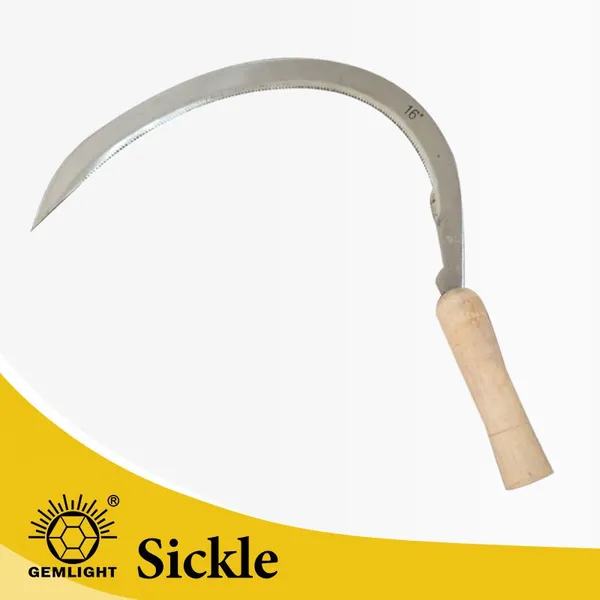
Forged Farm Sickle With Sharp Blade for African Importers OEM Bulk Order Support for Harvesting and Smallholder Farming for WholesalUS$ 0.28 - 0.33MOQ: 3000 Pieces
-
Strong Carbon Steel Farming Sickle for Uganda Tanzania Zambia Agricultural Tool DistributorsUS$ 0.34 - 0.47MOQ: 3000 Pieces