
 Business License

Forged or stamped machete blades: which one lasts longer in the field?
Forged or stamped machete blades: which one lasts longer in the field?
Every supplier will tell you their blade is forged. Some of them are telling the truth.
The word sells, so it gets used loosely. A blade shaped by a press from flat strip is stamped, not forged.
Both methods can produce a good machete. Both can produce a bad one. What differs is how the steel is worked and what that costs.
This guide covers grain structure, bending behaviour and the real price gap, so you can judge a quote instead of a slogan.
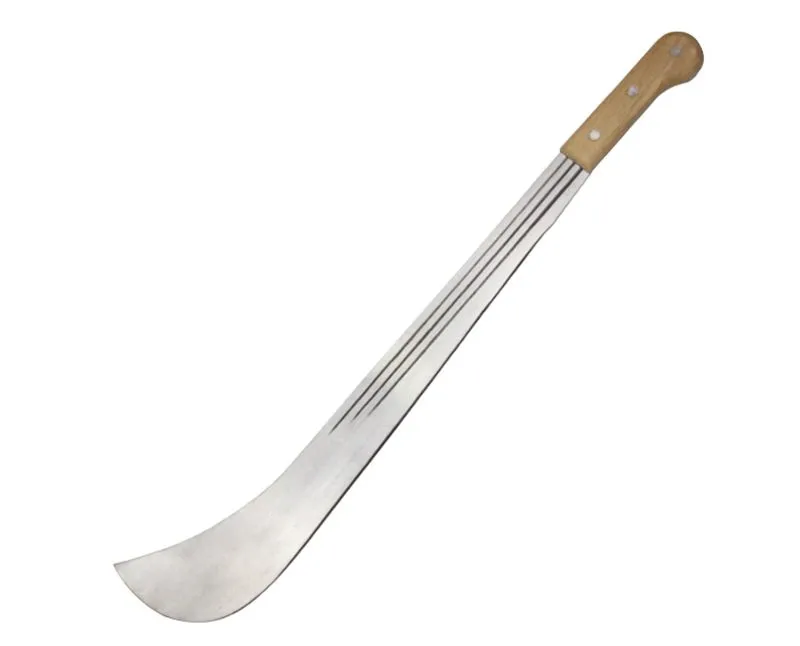
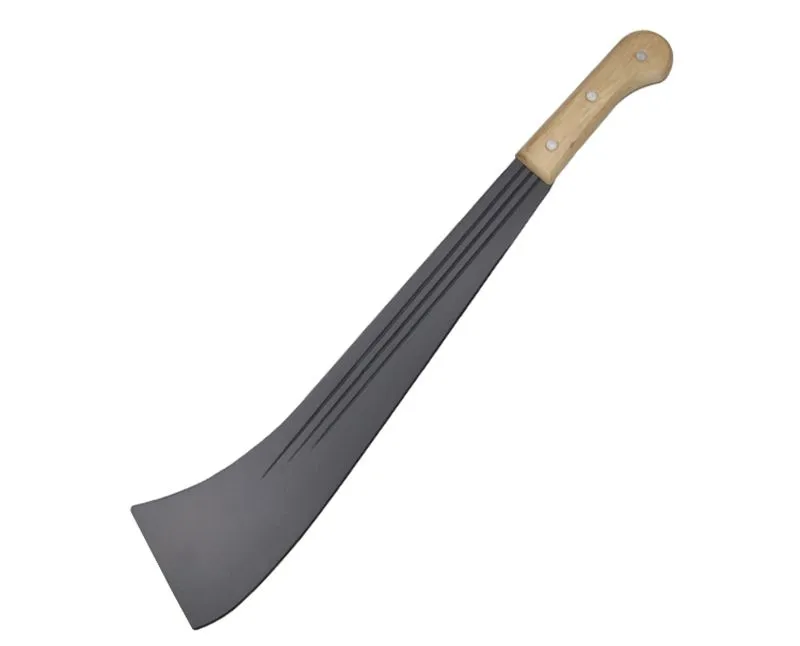
How does each process affect grain structure and toughness?
Steel strip arrives from the mill with a grain direction, set by rolling. That direction stays in the finished blade.
A stamped blade is cut from strip, then ground and heat treated. The grain follows the length of the strip.
If the blade profile is nested along the rolling direction, the grain runs from handle to tip. That is the strong orientation.
If a supplier nests parts across the strip to save material, the grain runs the wrong way. Toughness drops without any visible sign.
A forged blade starts as a heated billet or bar. Hammering or rolling moves the steel into shape instead of cutting it away.
That flow means the grain follows the curve of the blade, including the transition into the tang.
Forging also lets the maker thicken the spine and thin the edge in one piece, with a taper that stamping cannot produce cheaply.
Good forging closes internal voids and refines the structure. Poor forging, with wrong temperatures, can leave coarse grain and cracks.
So the method matters, but the discipline behind it matters more.
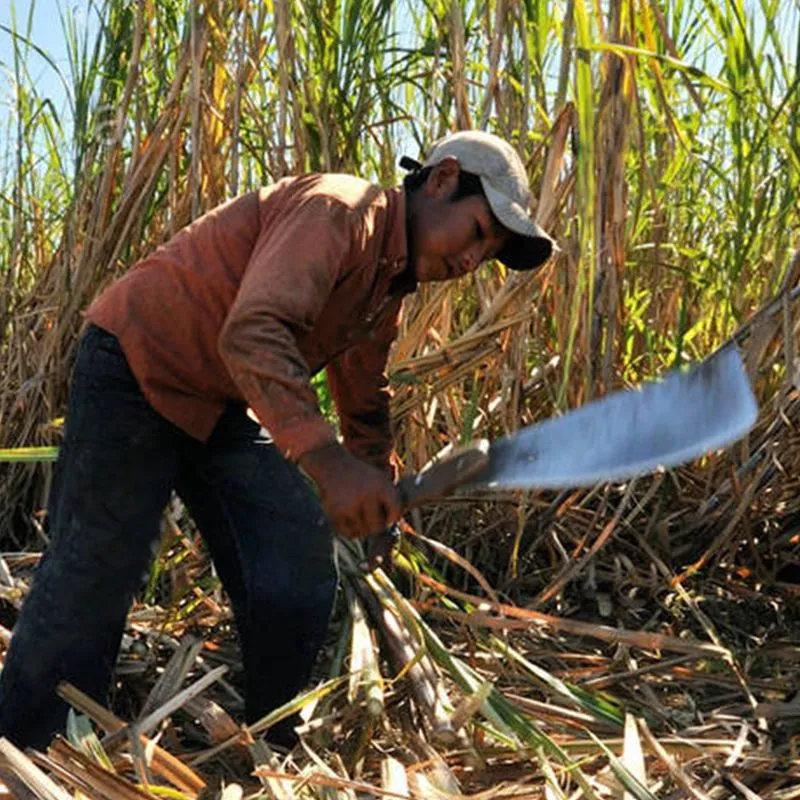
Which one resists bending in hardwood?
Hardwood punishes a blade in two ways. It bends the blade sideways, and it shocks the tang.
A forged blade usually wins here, because it can carry a thicker spine and a stronger shoulder at the tang.
The grain flowing around the tang corner resists cracking. That corner is where most stamped blades fail first.
Stamped blades can still survive hardwood if three things are right. The steel grade must suit the job.
The heat treatment must temper the blade enough to bend rather than snap. And the tang must be wide, with smooth radii.
A thin stamped blade with a narrow tang and a hard temper will crack in dry eucalyptus. That is a design failure, not a process failure.
Ask the supplier for the tang width in millimetres and a photo of the tang before assembly.
Then ask what happens when a customer bends the blade 30 degrees. A good blade takes a set. A brittle one breaks.
Field repairs tell you the same thing. A bent blade can be straightened and reused. A snapped tang ends the tool.
Ask suppliers for their return rate on tang failures. In good plants that number is close to zero.
How does the price gap compare per unit?
Forging costs more to run. It needs heating, hammering or rolling, more handling and more grinding time.
Tooling for a forged line is also heavier, so suppliers want volume before they quote well.
As a rule, expect a forged blade to quote higher per piece than a stamped blade of the same size and steel.
The gap often sits between 20 and 40 percent, depending on the model and the order size.
At low volumes the gap can be wider, because setup dominates. At high volumes it narrows, but it rarely disappears.
What you get for the difference is a blade that tolerates abuse and holds a taper. Whether that is worth it depends on your market.
For tender supply and estate tools, the forged blade often pays for itself in fewer replacements.
For retail price points and promotional lines, a well made stamped blade is the better business decision.
Do not pay a forged price for a stamped blade. Ask for the process in the quote and check it against the photos.
Ask for the price with and without the sheath. Sheath cost often hides a weak blade price.
Compare cost per kilogram of finished blade as well as cost per piece. That exposes thin steel sold as heavy.
Can you tell a forged blade from a stamped one?
Yes, with a few simple observations. None of them requires a lab.
Look at the spine near the handle. A forged blade often thickens there, and the transition into the tang is smooth and continuous.
Look at the surface. Forged blades usually show a ground or scaled finish with slight irregularity. Stamped blades are flatter and more uniform.
Check the blade width along its length. Forging allows a distal taper, so the tip is thinner than the base. Stamping gives a constant width.
Look at the tang. A stamped blade's tang is usually the same thickness as the blade. A forged one often tapers.
Weigh the piece. A forged blade of the same length usually carries more steel.
Ask for a photo of the raw stage before grinding. A real forging line shows hot billets or a rolling station.
Ask for the weight of the blank before grinding. Forged blanks run heavier for the same finished size.
Forged or stamped RFQ checklist
Ask these questions and compare answers across suppliers.
Manufacturing process: forged or stamped from strip
Steel grade and mill source
Grain direction relative to the blade axis
Spine thickness at base and near tip
Tang width, thickness and transition radius
Heat treatment sequence, including tempering temperature range
Measured hardness range in HRC
Bend test result and acceptance limit
Finished weight per piece in grams
Surface finish and grinding method
Price at 1,000, 5,000 and 20,000 pieces
Sample lead time and bulk lead time
Buy the process your customer's work demands. Then verify it, because the label on the quote is not proof.
Recently Posted
-
Wood or plastic handle: which machete handle do buyers reorder?
October 22, 2026Wood or plastic handle: which machete handle do buyers reorder?Handles are the cheapest part of a machete and the most common reas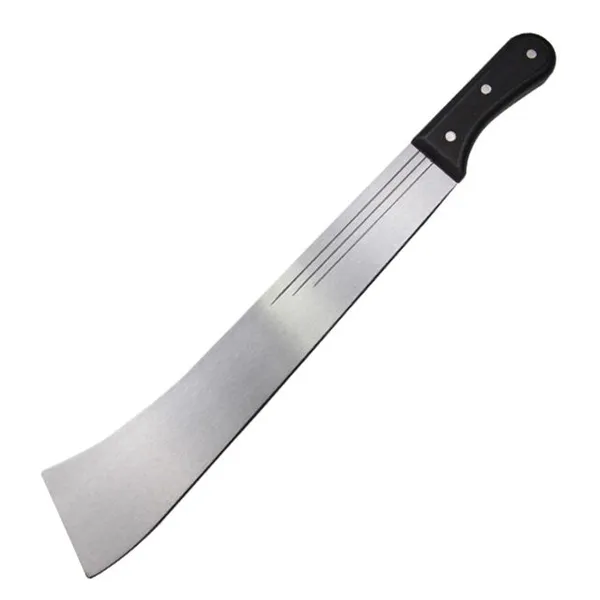 Read More
-
How do I choose machete blade length, thickness and edge angle for each task?
October 22, 2026How do I choose machete blade length, thickness and edge angle for each task?Three numbers decide how a machete performs. Length, Read More
-
Which carbon steel grade should I specify for machete blades?
October 22, 2026Which carbon steel grade should I specify for machete blades?Most machete quotes mention a steel grade in passing. Few explain wha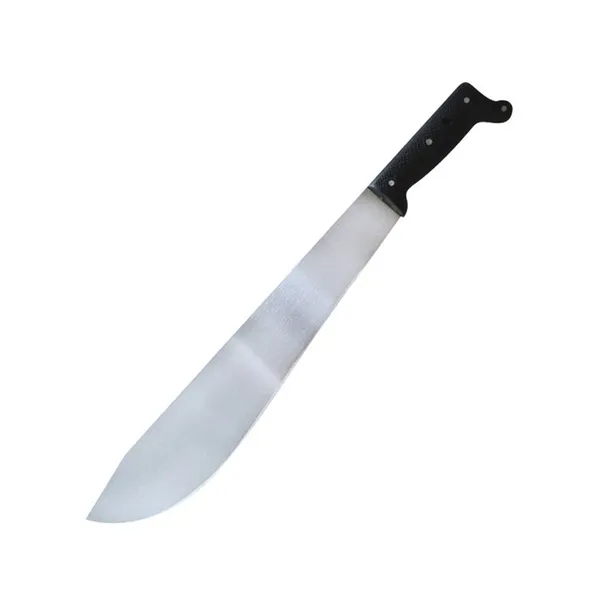 Read More
-
What is a cane knife, and why can't a standard machete replace it?
October 22, 2026What is a cane knife, and why can't a standard machete replace it?A cane knife looks like a machete that someone cut short and Read More

Contact Us
Recommended Products
-
 Heavy Duty Cane Knife Machete for Wholesale Buyers Factory Direct Export for Rural Agricultural Projects Durable Hand ToolNegotiableMOQ: 1200 Pieces
-
Agricultural Hoe Head Garden Rail Steel Tool for Tough Soil Cheap Price Hand ToolsUS$ 1.07 - 1.27MOQ: 1200 Pieces
-
Sturdy Rail Steel Hoe for Weeding, H305 Perfect for Agricultural and Garden TasksUS$ 1.07 - 1.27MOQ: 1200 Pieces
-
Heavy Duty Manganese Steel Garden Shovel Round Point Digging Shovel With Wooden Handle Farm Tool SupplierUS$ 2.14 - 2.36MOQ: 1200 Pieces
-
Big Shovel Wide Shovel Mud Shovel Heavy Duty Steel Blade for Farm Drainage Soil Moving Cleaning and Landscaping UseUS$ 2.14 - 2.36MOQ: 1200 Pieces
-
Strong Teeth Soil Rake for Farm Tool Suppliers Private Label Export for Farm Maintenance African Distribution Factory Bulk OrderUS$ 0.88 - 1.35MOQ: 2000 Pieces
-
Manual Cane Knife Machete for Wholesale Buyers Factory Direct Export for Rural Agricultural Projects Durable Hand ToolNegotiableMOQ: 1200 Pieces
-
Large High Carbon Steel Machete Knife Agricultural Machete for Farming Bush Cutting Garden Tool SupplierNegotiableMOQ: 1200 Pieces
-
Wholesale Heavy Duty Pick Mattock for Mining Road Work and Farm Digging for Wholesale Tool Dealers With Bulk Order ServiceUS$ 1.85 - 2.3MOQ: 1200 Pieces
-
Carbon Steel Manual Pickaxe for Hard Soil Breaking and Trenching for African Importers With OEM Bulk Order Support Agricultural ToolUS$ 1.85 - 2.3MOQ: 1200 Pieces

-
OEM Farm Sickle With Sharp Blade for African Importers OEM Bulk Order Support for Harvesting and Smallholder Farming for Wholesale BUS$ 0.28 - 0.33MOQ: 3000 Pieces
-
Heavy Duty Manganese Steel Round Point Shovel Garden Digging Shovel With Wooden Handle Agricultural Tool ManufacturerUS$ 2.14 - 2.36MOQ: 1200 Pieces
-
Farm Shovel Factory Supply for Regional Import Distributors Bulk Wholesale Supply for Garden Work and Trenching for Agricultural DealersUS$ 2.14 - 2.36MOQ: 1200 Pieces
-
Heavy Duty Garden Rake for African Importers OEM Factory Supply for Agricultural Use African Market Factory Bulk OrderUS$ 0.88 - 1.35MOQ: 2000 Pieces
-
Agricultural Soil Rake for Agricultural Dealers Export Supply for Garden Cleaning African Dealer Channels Factory Bulk OrderUS$ 0.88 - 1.35MOQ: 2000 Pieces
-
Manual Farm Machete for African Importers OEM Factory Supply for Farming and Land Clearing Durable Hand ToolNegotiableMOQ: 1200 Pieces
-
Large Heavy Duty Carbon Steel Garden Landscaping Digging HoeUS$ 1.07 - 1.27MOQ: 1200 Pieces
-
Heavy Duty Rail Steel Mattock Pick Axe With Wooden Handle for Digging Soil Mining and Agricultural Tool SupplierUS$ 1.85 - 2.3MOQ: 1200 Pieces
-
Forged Farm Sickle With Sharp Blade for African Importers OEM Bulk Order Support for Harvesting and Smallholder Farming for WholesalUS$ 0.28 - 0.33MOQ: 3000 Pieces
-
Strong Carbon Steel Farming Sickle for Uganda Tanzania Zambia Agricultural Tool DistributorsUS$ 0.34 - 0.47MOQ: 3000 Pieces