


 Business License

Which Spade Types Are Best Suited to Landscaping Contractors?
Which Spade Types Are Best Suited to Landscaping Contractors?
A landscaping crew buys tools for daily work on site, not for a shelf at home.
Their spades take more load in one season than a garden spade takes in five years.
This guide shows which spade types a contractor account needs and how a factory wins that order.
The Spades a Landscaping Crew Really Uses
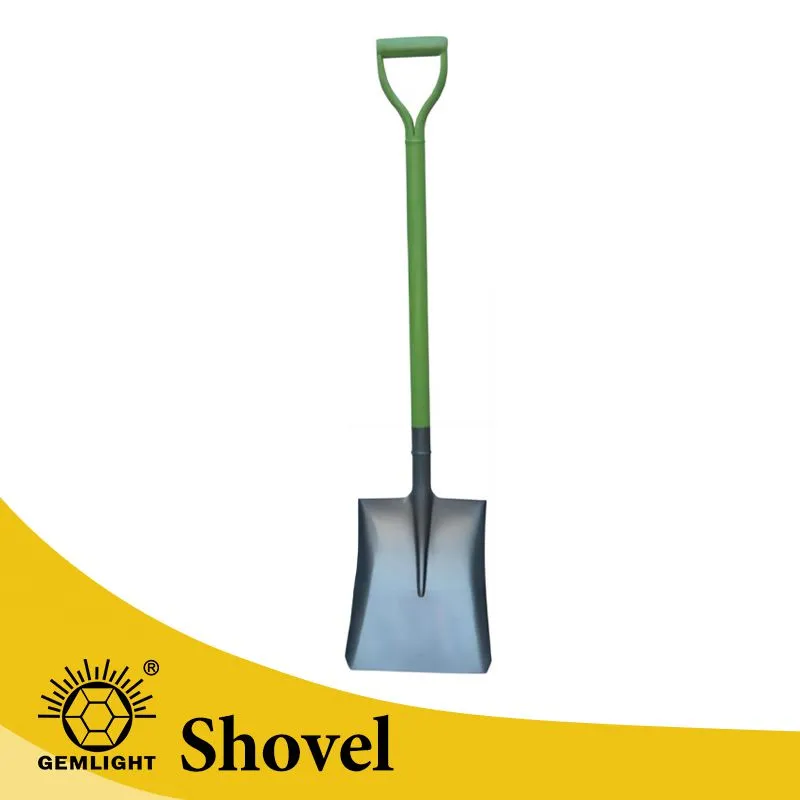
A digging spade is the first tool on the truck, used for planting and moving soil.
Its blade is flat, around 180 mm wide, with a sharpened straight edge.
A border spade is the smaller version, and crews use it between plants and along beds.
That blade is narrower, often 130 mm to 150 mm, which keeps the cut tight.
A turfing spade lifts lawn in neat strips at a steady depth.
Some turfing models carry a half-moon blade that cuts a line under the grass.
An edging spade cuts a vertical border and sometimes has a sharpened side too.
A drain spade runs long and narrow, near 160 mm by 400 mm, for pipe work.
Most crews keep one drain spade for every three or four digging spades.
A trenching spade serves irrigation and cable work on the same site.
Crews buy scoop shovels from a separate list, because that is a different tool group.
Ask a contractor which spade they replace most often, then stock that model deepest.
Contractors rarely buy a full range at once, so a first order usually stays narrow.
Why Durability Beats the Lowest Unit Price
A contractor counts cost per working year, not cost per piece at the factory gate.
A spade that fails in week three costs a crew half a day of paid work.
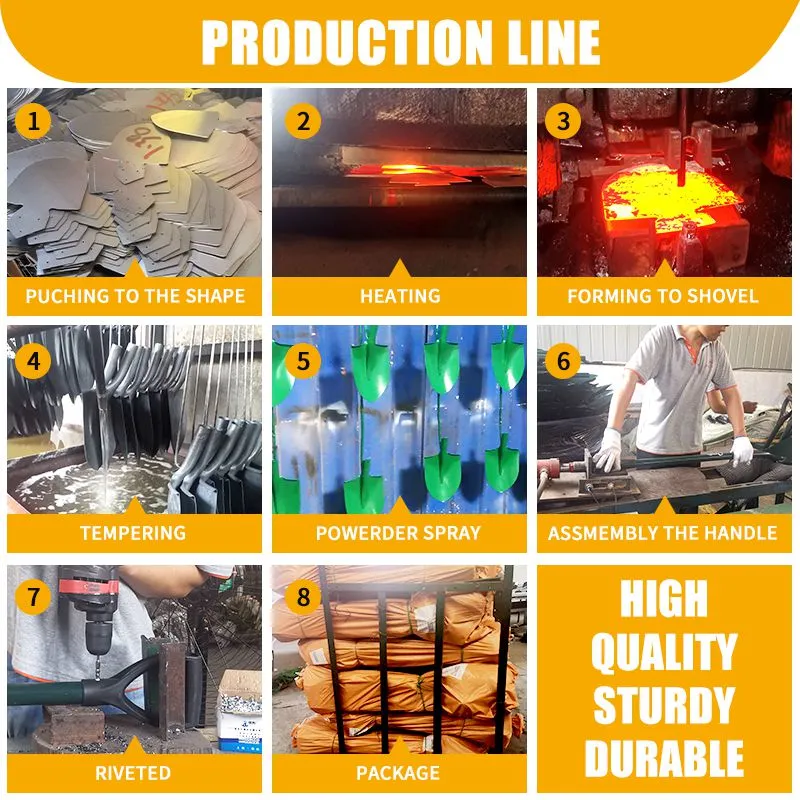
A solid socket is the first upgrade, because it joins blade and shaft in one piece.
An open socket with a rivet costs less, but it loosens sooner under hard levering.
Blade steel of 2.0 mm to 2.5 mm resists bending when a user levers out a root.
A forged or heat-treated blade holds its edge longer in stony ground.
A step or a folded shoulder lets the user press down with a boot in dry clay.
That small feature adds a little cost, and crews notice it within one season.
Check the joint by hand on the sample, and look for a weld or a rivet.
Ask the factory to state the steel grade and the blade thickness in writing.
Thicker steel raises the unit weight, which also raises your freight cost.
Balance the two, because an over-heavy tool slows the user by mid-afternoon.
Shaft Material and Handle Length on Site
The shaft is where cheap spades fail first, so contractors watch it closely.
Ash and hickory are the classic choices, because they flex instead of snapping.
Fibreglass costs more, yet it ignores rain and does not split along the grain.
A painted steel tube is the cheapest option and the least popular on a site.
Handle length follows the job: a digging spade runs about 700 mm to 800 mm.
A border spade is shorter still, often 600 mm, so the user works close to the bed.
A drain spade needs a long shaft, up to 1200 mm, to reach the bottom of a trench.
Crews pick between a T, YD or D shape at the top, and most wear gloves.
Many crews prefer a straight shaft with a small grip, because it packs easily in a van.
Order one grip style across the range, or workers swap handles and lose the parts.
Ask for shaft length in millimetres, measured from the top of the grip to the socket.
That number decides how the tool stands in a rack and how many fit in a carton.
Trade Packing, Repeat Orders and Spare Handles
Contractors buy plain, and a printed card adds cost they do not want to pay.
Trade packing is often a paper bundle or a simple sleeve over the blade.
A carton of long-handled spades may hold only six pieces, so volume builds quickly.
Ask for carton size and pallet count early, because those numbers set your freight.
Most landscape accounts order twice a year, before spring work and before autumn work.
The second order often repeats the first mix, with one or two models added.
Spare handles sell well to this channel, because a good blade outlasts its shaft.
Push the old handle out, fit a new one, and the crew keeps the same blade.
Offer a small carton of spare shafts, sized to match your main spade models.
Crews also buy files and edge sharpeners, which lift the average order value.
Keep a written price break at 100, 300 and 500 pieces per model.
A steady repeat order is worth more than one large first order at a low price.
Ask how many working weeks the tool should last before a replacement is needed.
How to Specify Spades for a Contractor Account
Name the job first, such as planting, edging, turfing or drainage work.
Spell out the head size in millimetres, including the thickness of the steel.
State the socket type and the steel grade you expect at that price.
Say what the shaft is made of, how long it is, and which grip you want.
Describe the packing: pieces per carton, carton size and pallet height.
Ask for the unit weight, because weight affects freight and user fatigue.
Request a sample of each model, then test it in your own local soil.
Send three units to a friendly crew and ask which one they kept.
Set the tolerance you accept on blade thickness, such as plus or minus 0.2 mm.
Agree a delivery window before the season starts, not after the first order.
Say which models your crews buy most, so the factory quotes the right depth.
Recently Posted
-
Documents Needed to Bid for a Hoe Supply Contract
October 16, 2026Documents Needed to Bid for a Hoe Supply ContractTender submissions are judged on documents before they are judged on price.A stro Read More
 -
Hoe Specifications in Aid and Emergency Tool Kits: What Tenders Require
October 16, 2026Hoe Specifications in Aid and Emergency Tool Kits: What Tenders RequireAid and emergency programs buy hoes by the tens of thousand Read More
 -
Winning Hoe and Hand Tool Tenders: A Supplier's Guide to Public Bids
October 16, 2026Winning Hoe and Hand Tool Tenders: A Supplier's Guide to Public BidsTender business looks attractive because volumes are large Read More
 -
How to Pack Hoes for Sea Shipment: Rust Prevention and Damage Control
October 16, 2026How to Pack Hoes for Sea Shipment: Rust Prevention and Damage ControlA hoe can pass every inspection at the factory and still arri Read More

Contact Us
Recommended Products
-
 Heavy Duty Cane Knife Machete for Wholesale Buyers Factory Direct Export for Rural Agricultural Projects Durable Hand ToolNegotiableMOQ: 1200 Pieces
 -
Agricultural Hoe Head Garden Rail Steel Tool for Tough Soil Cheap Price Hand ToolsUS$ 1.07 - 1.27MOQ: 1200 Pieces
-
Sturdy Rail Steel Hoe for Weeding, H305 Perfect for Agricultural and Garden TasksUS$ 1.07 - 1.27MOQ: 1200 Pieces
-
Heavy Duty Manganese Steel Garden Shovel Round Point Digging Shovel With Wooden Handle Farm Tool SupplierUS$ 2.14 - 2.36MOQ: 1200 Pieces
-
Big Shovel Wide Shovel Mud Shovel Heavy Duty Steel Blade for Farm Drainage Soil Moving Cleaning and Landscaping UseUS$ 2.14 - 2.36MOQ: 1200 Pieces





-
Strong Teeth Soil Rake for Farm Tool Suppliers Private Label Export for Farm Maintenance African Distribution Factory Bulk OrderUS$ 0.88 - 1.35MOQ: 2000 Pieces
-
Manual Cane Knife Machete for Wholesale Buyers Factory Direct Export for Rural Agricultural Projects Durable Hand ToolNegotiableMOQ: 1200 Pieces
-
Large High Carbon Steel Machete Knife Agricultural Machete for Farming Bush Cutting Garden Tool SupplierNegotiableMOQ: 1200 Pieces
-
Wholesale Heavy Duty Pick Mattock for Mining Road Work and Farm Digging for Wholesale Tool Dealers With Bulk Order ServiceUS$ 1.85 - 2.3MOQ: 1200 Pieces
-
Carbon Steel Manual Pickaxe for Hard Soil Breaking and Trenching for African Importers With OEM Bulk Order Support Agricultural ToolUS$ 1.85 - 2.3MOQ: 1200 Pieces





-
OEM Farm Sickle With Sharp Blade for African Importers OEM Bulk Order Support for Harvesting and Smallholder Farming for Wholesale BUS$ 0.28 - 0.33MOQ: 3000 Pieces
-
Heavy Duty Manganese Steel Round Point Shovel Garden Digging Shovel With Wooden Handle Agricultural Tool ManufacturerUS$ 2.14 - 2.36MOQ: 1200 Pieces
-
Farm Shovel Factory Supply for Regional Import Distributors Bulk Wholesale Supply for Garden Work and Trenching for Agricultural DealersUS$ 2.14 - 2.36MOQ: 1200 Pieces
-
Heavy Duty Garden Rake for African Importers OEM Factory Supply for Agricultural Use African Market Factory Bulk OrderUS$ 0.88 - 1.35MOQ: 2000 Pieces
-
Agricultural Soil Rake for Agricultural Dealers Export Supply for Garden Cleaning African Dealer Channels Factory Bulk OrderUS$ 0.88 - 1.35MOQ: 2000 Pieces





-
Manual Farm Machete for African Importers OEM Factory Supply for Farming and Land Clearing Durable Hand ToolNegotiableMOQ: 1200 Pieces
-
Large Heavy Duty Carbon Steel Garden Landscaping Digging HoeUS$ 1.07 - 1.27MOQ: 1200 Pieces
-
Heavy Duty Rail Steel Mattock Pick Axe With Wooden Handle for Digging Soil Mining and Agricultural Tool SupplierUS$ 1.85 - 2.3MOQ: 1200 Pieces
-
Forged Farm Sickle With Sharp Blade for African Importers OEM Bulk Order Support for Harvesting and Smallholder Farming for WholesalUS$ 0.28 - 0.33MOQ: 3000 Pieces
-
Strong Carbon Steel Farming Sickle for Uganda Tanzania Zambia Agricultural Tool DistributorsUS$ 0.34 - 0.47MOQ: 3000 Pieces





