


 Business License

Wood vs Fiberglass vs Steel Hoe Handles: A Wholesale Buyer's Comparison
Wood vs Fiberglass vs Steel Hoe Handles: A Wholesale Buyer's Comparison
The hoe head gets all the attention, but the handle decides your warranty cost.
A cheap head on a good handle usually survives. A good head on a bad handle comes back as a complaint.
This article compares the three main handle materials used in export hoes.
It also covers failure patterns, unit cost, freight impact, and the market fit for each.
How Each Handle Material Is Made
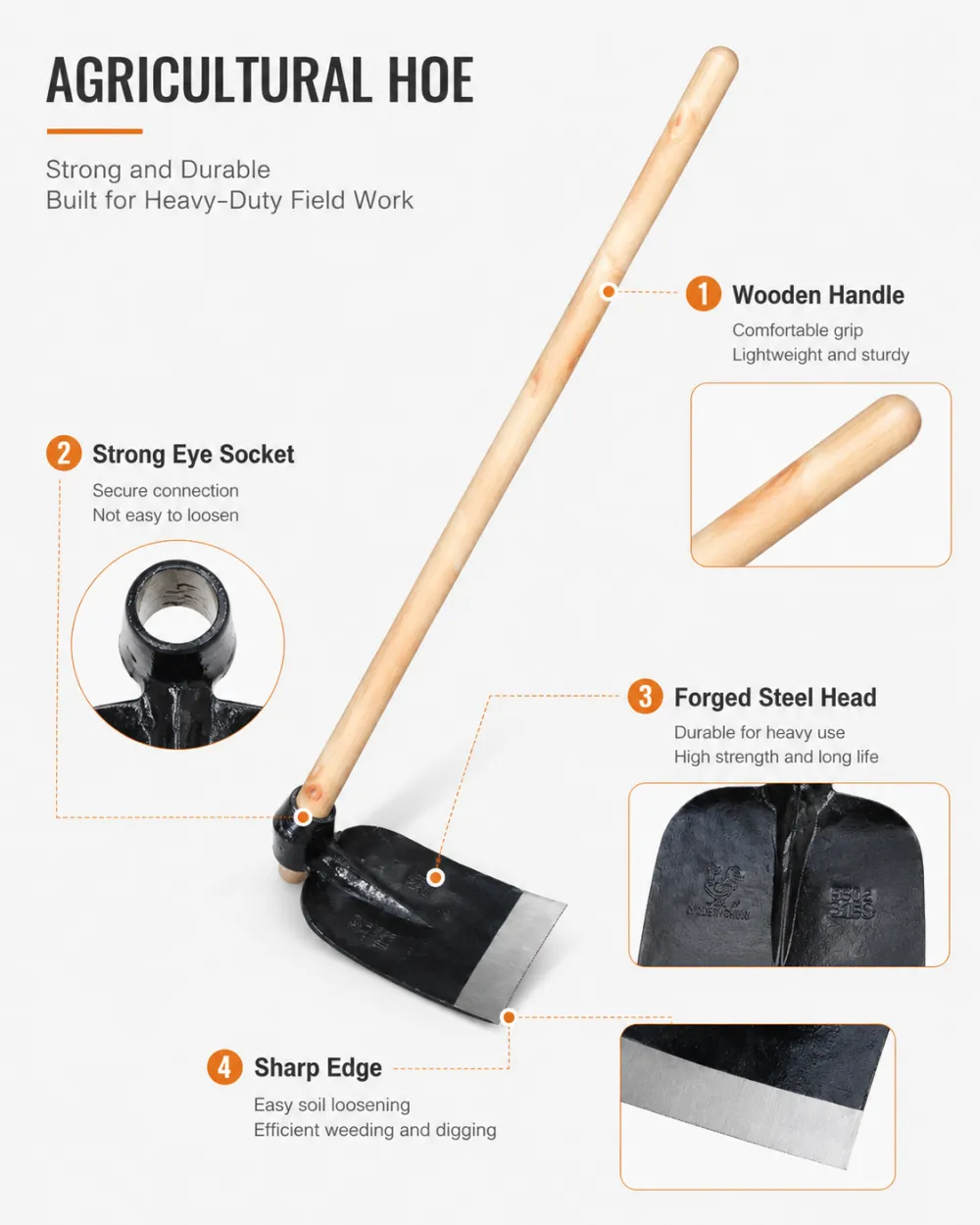
Wooden handles start as timber, usually ash, hickory, birch, or eucalyptus.
The wood is sawn into blanks, dried to a controlled moisture content, then shaped on a lathe or copy machine.
Good factories dry to around twelve to fifteen percent moisture, then sand and seal the surface.
The surface finish may be varnish, lacquer, wax, or a simple stain.
Fiberglass handles are made by pulling resin-soaked glass fibres through a heated die, a process called pultrusion.
Some are filament wound around a core instead. A coating is added for UV and abrasion resistance.
Steel handles are usually a tube, welded or riveted to the head, then powder coated.
An outer grip of plastic or rubber is often added for comfort and a better hold.
Each process has its own quality traps. For wood, it is moisture and grain direction.
For fiberglass, it is resin ratio and coating thickness. For steel, it is weld quality and coating coverage.
Ask for the wood moisture test result before packing, not after the complaint.
Ask how the resin content is controlled, and what coating thickness they target.
For steel handles, ask how the inside of the tube is protected from rust.
Performance in Wet and Dry Climates
Humidity changes everything for wooden handles, and buyers often underestimate it.
In tropical or humid climates, wood absorbs moisture and swells, so the fit in the eye gets tighter.
After a dry season, the same handle shrinks, and the head can become loose.
This is why wedges and metal ferrules matter so much on a wooden handle.
Fiberglass handles behave almost the same in wet and dry conditions, which is a real advantage.
They do not swell, rot, or feed insects, and they stay consistent across seasons.
Their weak point is sunlight. If the outer coating is scratched, UV can reach the fibres.
Steel handles are dimensionally stable but they rust wherever the coating is broken.
Wet storage is the enemy. A scratched tube can rust inside a container before it reaches the store.
That is why packing quality matters, and why desiccants help on long sea routes.
For wooden handles, ask the factory to pack them dry and then seal them.
For all handle types, avoid loading containers in heavy rain.

Which Handle Fails Most Often, and Why
Across returns data, wooden handles fail in two predictable ways.
The first is a split or break at the neck, right where the handle enters the eye.
That usually means poor grain alignment, an over-long eye, or a user who used the tool as a lever.
The second is loosening. The head rocks on the handle after a few weeks of use.
That points to undersized diameter, missing wedge, or wood that was not dried properly.
Fiberglass handles mostly fail by cracking near the collar, or by snapping without warning.
A snap is dangerous, so fiberglass needs a clean, undamaged surface and correct wall thickness.
Steel handles fail by rust, denting, and peeling coating, and the head can also come loose at the weld.
Ask your supplier for their claim rate per handle type. Serious factories track this number.
If they do not track it, ask about their worst return month in the last year.
Ask what they changed afterwards, and whether the change worked.
Suppliers who answer these questions keep improving, and their hoes show it.
Cost per Unit and Freight Impact
Wood is the cheapest handle option, and the price spread between grades is wide.
A clean, straight-grained, properly dried handle can cost several times a rough one.
Fiberglass usually costs more than wood, often two to three times more per piece.
Steel tube handles sit between the two, and the grip quality changes the price a lot.
Freight matters as much as unit cost, because handles are mostly air.
A hoe with a 120 cm handle fills a container quickly, so volume drives your landed cost.
The common trick is to ship heads and handles separately, in a knocked-down format.
That can cut shipping volume a lot, if your market accepts simple assembly at the destination.
Check whether the eye and handle are interchangeable before you plan a knocked-down order.
Knocked-down shipping also shifts assembly work to you or to your customer.
That is fine for industrial buyers, and a problem for retail consumers.
Compare the freight saving against the extra handling cost before deciding.
Choosing Handles for Your Market
Match the handle to the customer, not to your personal preference.
African and South Asian markets usually want wooden handles, because local replacement is easy and cheap.
Price sensitivity is high, and a farmer can fit a new local handle without importing anything.
Aid and government kits often specify wood for the same reason: field repairability.
European and North American garden retail wants fiberglass for the premium range.
There, consumers value light weight, no splinters, and a clean look.
Wood still sells in those markets, but as an eco or traditional choice, with visible grain.
Steel handles suit heavy duty and municipal tools more than garden hoes.
For mixed orders, quote two handle versions of the same head.
Then let your customers tell you which one sells, instead of guessing from a catalog.
Ask for a sample of each version in the same head weight, so the test is fair.
Send samples to three key buyers, and collect their feedback in writing.
Note which version they reorder, not only which one they praise.
Recently Posted
-
Best-Selling Hoe Models for Smallholder Farmers in Africa
October 15, 2026Best-Selling Hoe Models for Smallholder Farmers in AfricaAfrica is the largest single market for agricultural hand hoes in the wor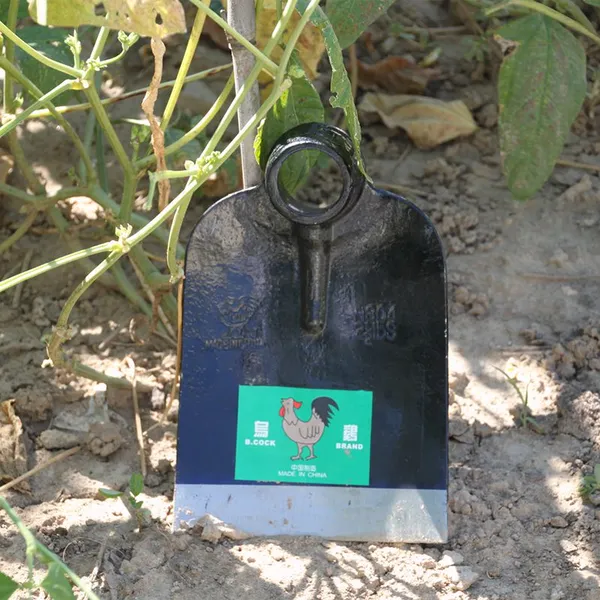 Read More
 -
Hoe Eye Shapes and Handle Diameters: How to Avoid Fitting Problems
October 15, 2026Hoe Eye Shapes and Handle Diameters: How to Avoid Fitting ProblemsA loose hoe head is one of the most common complaints in this pr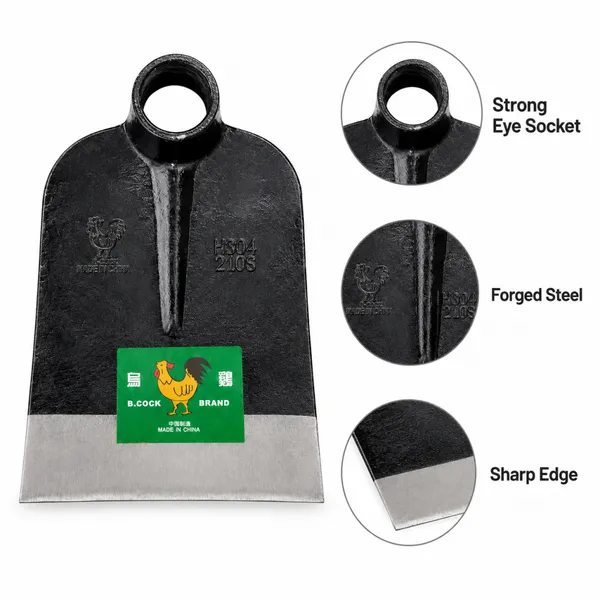 Read More
 -
Choosing Hoe Head Weight and Blade Size for Different Markets
October 15, 2026Choosing Hoe Head Weight and Blade Size for Different MarketsTwo hoes can look identical in a catalog photo and sell completely di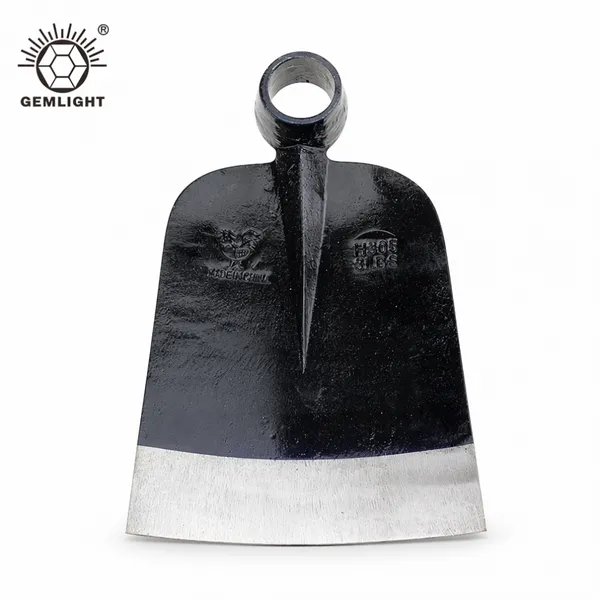 Read More
 -
Hoe Types Explained: Dutch, Grub, Mattock and Ridging Hoes Compared
October 15, 2026Hoe Types Explained: Dutch, Grub, Mattock and Ridging Hoes ComparedA hoe is not one tool. It is a family of shapes, each built for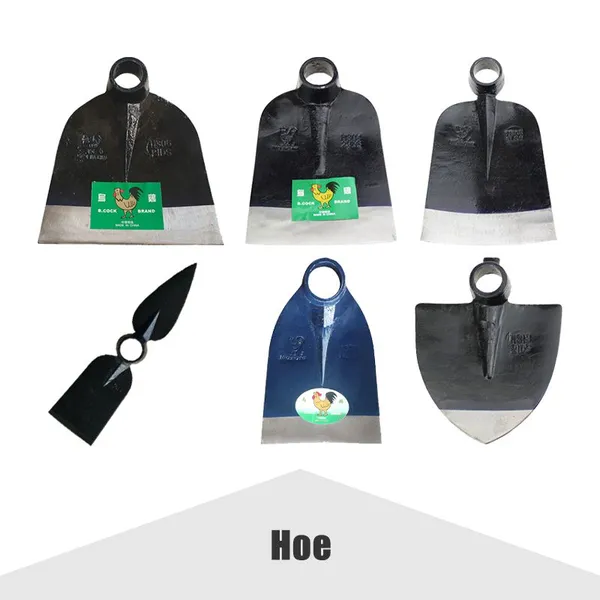 Read More

Contact Us
Recommended Products
-
 Heavy Duty Cane Knife Machete for Wholesale Buyers Factory Direct Export for Rural Agricultural Projects Durable Hand ToolNegotiableMOQ: 1200 Pieces
 -
Agricultural Hoe Head Garden Rail Steel Tool for Tough Soil Cheap Price Hand ToolsUS$ 1.07 - 1.27MOQ: 1200 Pieces
-
Sturdy Rail Steel Hoe for Weeding, H305 Perfect for Agricultural and Garden TasksUS$ 1.07 - 1.27MOQ: 1200 Pieces
-
Heavy Duty Manganese Steel Garden Shovel Round Point Digging Shovel With Wooden Handle Farm Tool SupplierUS$ 2.14 - 2.36MOQ: 1200 Pieces
-
Big Shovel Wide Shovel Mud Shovel Heavy Duty Steel Blade for Farm Drainage Soil Moving Cleaning and Landscaping UseUS$ 2.14 - 2.36MOQ: 1200 Pieces





-
Strong Teeth Soil Rake for Farm Tool Suppliers Private Label Export for Farm Maintenance African Distribution Factory Bulk OrderUS$ 0.88 - 1.35MOQ: 2000 Pieces
-
Manual Cane Knife Machete for Wholesale Buyers Factory Direct Export for Rural Agricultural Projects Durable Hand ToolNegotiableMOQ: 1200 Pieces
-
Large High Carbon Steel Machete Knife Agricultural Machete for Farming Bush Cutting Garden Tool SupplierNegotiableMOQ: 1200 Pieces
-
Wholesale Heavy Duty Pick Mattock for Mining Road Work and Farm Digging for Wholesale Tool Dealers With Bulk Order ServiceUS$ 1.85 - 2.3MOQ: 1200 Pieces
-
Carbon Steel Manual Pickaxe for Hard Soil Breaking and Trenching for African Importers With OEM Bulk Order Support Agricultural ToolUS$ 1.85 - 2.3MOQ: 1200 Pieces





-
OEM Farm Sickle With Sharp Blade for African Importers OEM Bulk Order Support for Harvesting and Smallholder Farming for Wholesale BUS$ 0.28 - 0.33MOQ: 3000 Pieces
-
Heavy Duty Manganese Steel Round Point Shovel Garden Digging Shovel With Wooden Handle Agricultural Tool ManufacturerUS$ 2.14 - 2.36MOQ: 1200 Pieces
-
Farm Shovel Factory Supply for Regional Import Distributors Bulk Wholesale Supply for Garden Work and Trenching for Agricultural DealersUS$ 2.14 - 2.36MOQ: 1200 Pieces
-
Heavy Duty Garden Rake for African Importers OEM Factory Supply for Agricultural Use African Market Factory Bulk OrderUS$ 0.88 - 1.35MOQ: 2000 Pieces
-
Agricultural Soil Rake for Agricultural Dealers Export Supply for Garden Cleaning African Dealer Channels Factory Bulk OrderUS$ 0.88 - 1.35MOQ: 2000 Pieces





-
Manual Farm Machete for African Importers OEM Factory Supply for Farming and Land Clearing Durable Hand ToolNegotiableMOQ: 1200 Pieces
-
Large Heavy Duty Carbon Steel Garden Landscaping Digging HoeUS$ 1.07 - 1.27MOQ: 1200 Pieces
-
Heavy Duty Rail Steel Mattock Pick Axe With Wooden Handle for Digging Soil Mining and Agricultural Tool SupplierUS$ 1.85 - 2.3MOQ: 1200 Pieces
-
Forged Farm Sickle With Sharp Blade for African Importers OEM Bulk Order Support for Harvesting and Smallholder Farming for WholesalUS$ 0.28 - 0.33MOQ: 3000 Pieces
-
Strong Carbon Steel Farming Sickle for Uganda Tanzania Zambia Agricultural Tool DistributorsUS$ 0.34 - 0.47MOQ: 3000 Pieces





