


 Business License

Hoe Eye Shapes and Handle Diameters: How to Avoid Fitting Problems
Hoe Eye Shapes and Handle Diameters: How to Avoid Fitting Problems
A loose hoe head is one of the most common complaints in this product category.
It rarely comes from bad steel or poor forging. It comes from a fitting that was never properly defined.
The eye and the handle are made by two different processes, often in two different factories.
This article explains the shapes, the measurements, and the tolerances that keep them together.
Common Eye Shapes in Export Hoes
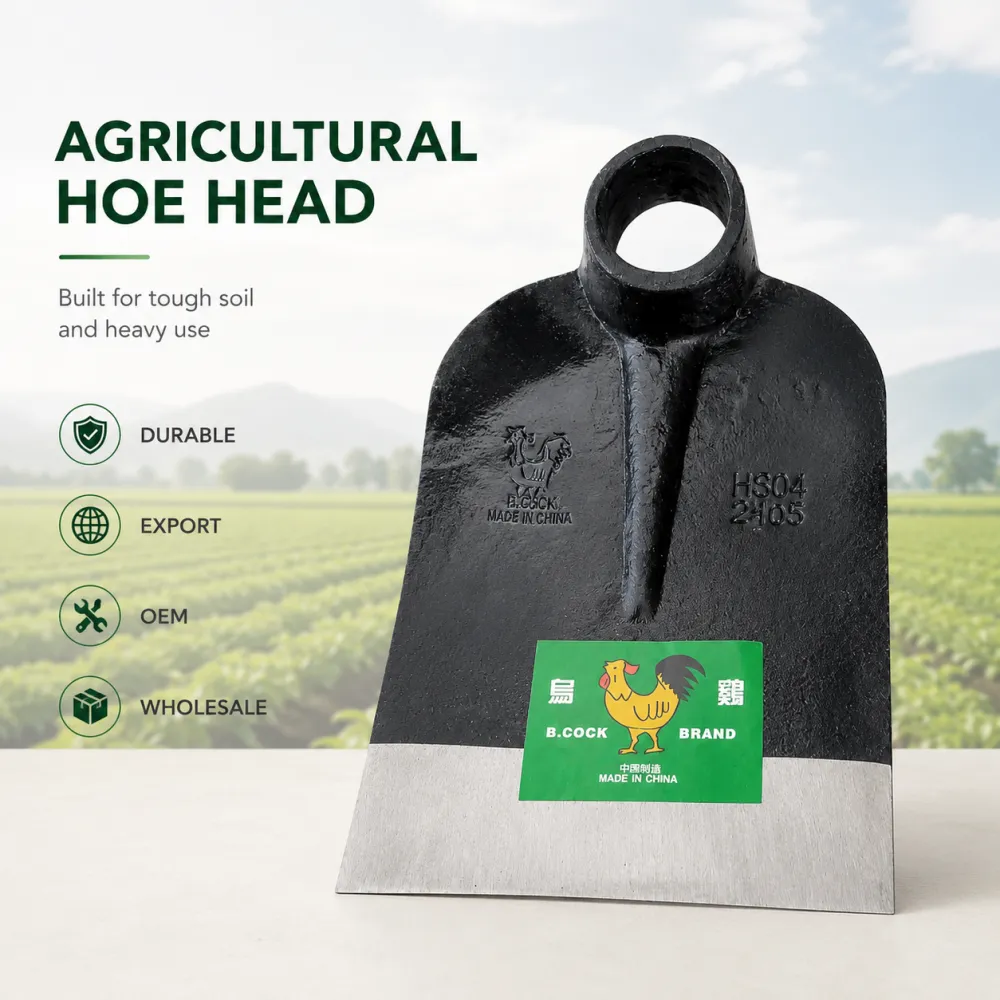
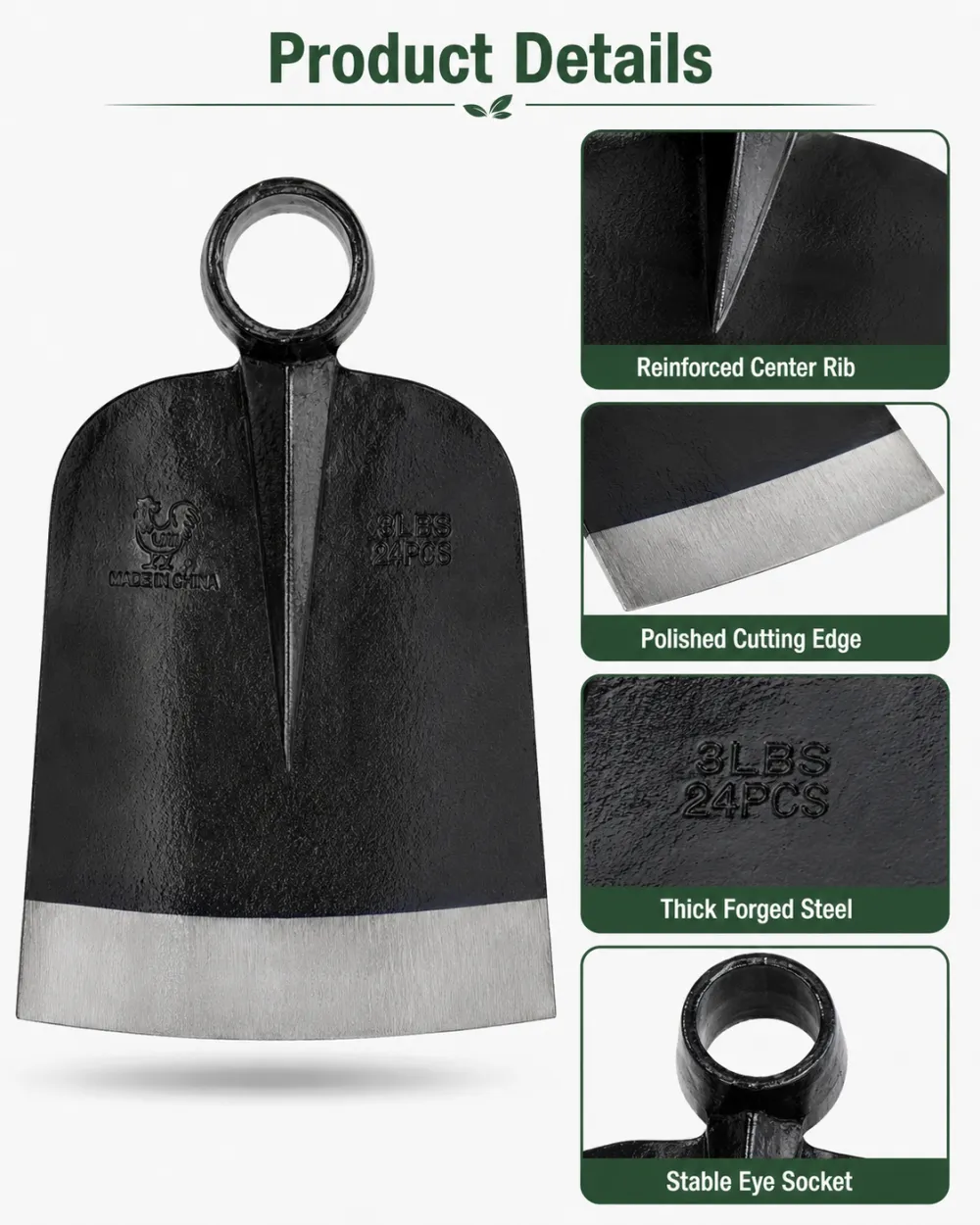
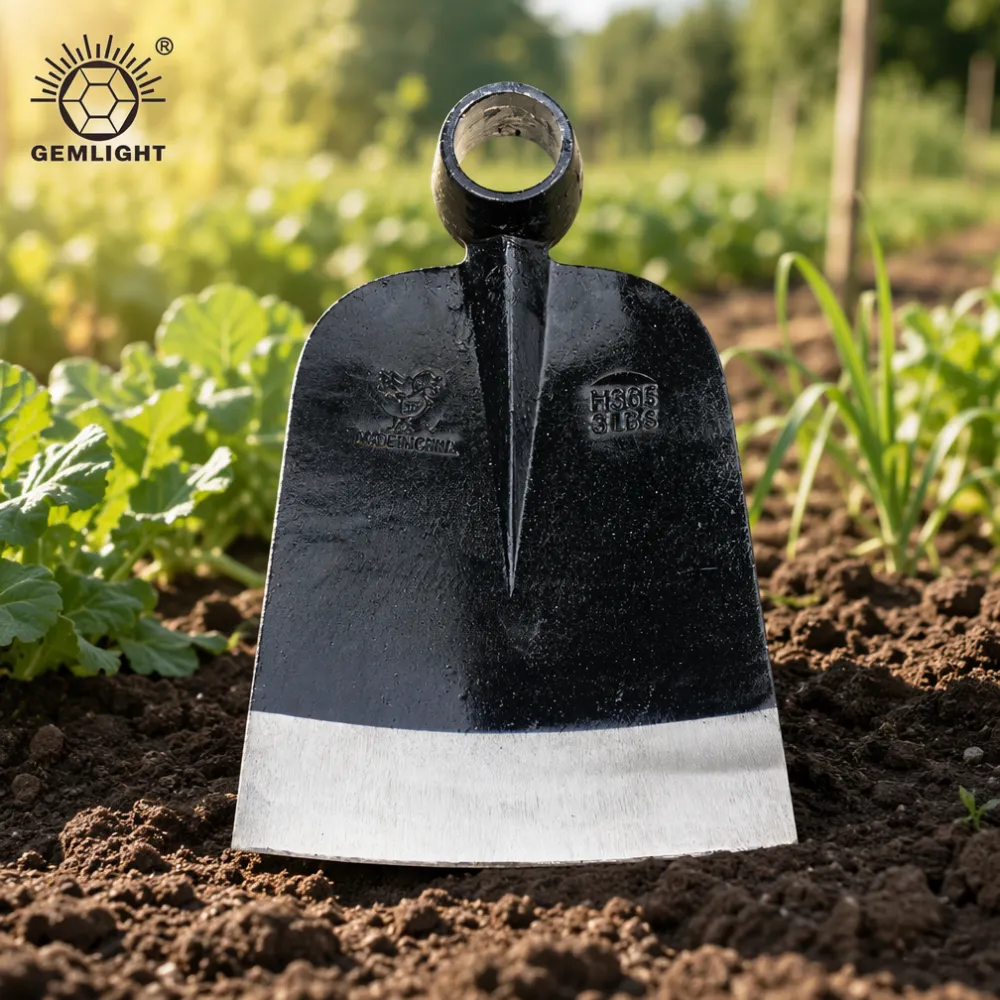
The eye is the hole in the head where the handle passes through.
Export hoes use a small number of eye shapes, and each one suits a different handle.
The round eye is the simplest. It takes a round wooden handle and is common on agricultural hoes.
The oval eye is wider than it is tall. It holds a handle better against rotation.
The D-shaped eye has a flat side and a curved side, and it grips a D-section handle firmly.
The rectangular or slotted eye takes a flat-section handle, often on heavy digging tools.
Tapered or conical eyes are wider at the top and narrower at the bottom.
A tapered eye lets you drive the handle in from above and wedge it tightly.
Some heads use a socket instead of an eye, formed as a cone that the handle fits into.
Others use no hole at all, with the handle riveted to a steel strap.
Know which shape you are buying before you discuss the handle.
Ask the factory for the eye drawing in millimetres, not only the model number.
Model names describe the head shape, and they say nothing about the eye.
Two heads with the same name can have different eyes from different factories.
How Handle Diameter Is Measured
Handle diameter is not one number, and this causes most of the confusion.
A wooden handle is usually tapered, so it has three useful measurements.
The top end is the part that enters the eye, and it is the critical dimension.
The middle is where the user grips, and it should feel comfortable in the hand.
The bottom end is the tip, and it should be a little wider than the grip for safety.
Measure the top end with a caliper in two directions, width and height.
A round handle gives two similar numbers. An oval handle gives two different ones.
Take measurements at the point where the handle will sit inside the eye, not at the very tip.
Record the numbers in millimetres, and state them at a defined distance from the top.
If the eye is tapered, the handle should match that taper at the same depth.
Measure with the handle in place, not loose, whenever that is possible.
Ask the factory to mark the depth line on the handle before assembly.
That mark makes inspection fast, and it settles arguments quickly.


Why Fitting Tolerances Drift Between Orders
Fittings drift for boring reasons, and almost all of them are predictable.
Forging dies wear over time, so the eye slowly grows on the same drawing.
Heat treatment can distort the eye slightly, especially on thin forged heads.
The handle factory turns wood to a tolerance, and small changes there add up.
Wood moisture is a hidden variable. A handle dried to twelve percent swells in humid air.
Paint or powder coating inside the eye adds thickness and can block a tight handle.
The wedge type changes the fit too. A steel wedge grips differently from a wooden one.
Different handle factories in the same order can also produce slightly different sizes.
None of these alone breaks a tool. Together they create a twenty percent failure rate.
Climate adds the final variable, because humidity changes wood after delivery.
A tool that fits well in a dry factory can loosen after a humid sea voyage.
Plan for that change by leaving a small allowance in the fitting.
Writing Specs That Keep Fittings Consistent
A clear fitting specification removes most of this risk, and it takes twenty minutes to write.
State the eye size as width by height, at the top opening and at the bottom exit.
State the eye shape in words: round, oval, D-shaped, or rectangular.
State the handle diameter at a fixed distance from the top end, with a tolerance.
A tolerance of about one millimetre is realistic for wood. Tighter than that creates waste.
State the moisture content range, for example twelve to fifteen percent for wooden handles.
State the wedge material and whether a metal ferrule is required.
State whether the head must be riveted, wedged, or both.
Add one acceptance rule: the head must not rotate or move under normal hand force.
Send a photo of the assembled sample with your dimensions drawn on it.
Keep that photo with every purchase order, so nothing depends on memory.
Ask for the drawing number on the invoice, and check it on arrival.
Files travel better than emails, so store them in one shared folder.
Testing the Fit Before Mass Production
Testing is cheap and fast, so never skip it.
Ask the factory to assemble ten pieces from the production batch and send a short video.
Grip the handle and try to rotate the head by hand. Any movement is a fail.
Then strike a wooden block several times, and check the fitting again.
For wooden handles, test both dry and after a short humid storage period.
Measure the eye on three heads with a caliper, and compare them with the drawing.
Weigh the assembled tool, and confirm it matches the agreed total weight.
If the fit is loose, fix it in the specification, not on the packing line.
A single page of dimensions prevents a whole container of complaints, and it costs nothing.
If the fit fails, ask the factory for a written corrective action, not a promise.
Then test the next batch against the same rule, and record the result.
Two good batches in a row are a real sign the process is stable.
Recently Posted
-
Best-Selling Hoe Models for Smallholder Farmers in Africa
October 15, 2026Best-Selling Hoe Models for Smallholder Farmers in AfricaAfrica is the largest single market for agricultural hand hoes in the wor Read More
 -
Choosing Hoe Head Weight and Blade Size for Different Markets
October 15, 2026Choosing Hoe Head Weight and Blade Size for Different MarketsTwo hoes can look identical in a catalog photo and sell completely di Read More
 -
Wood vs Fiberglass vs Steel Hoe Handles: A Wholesale Buyer's Comparison
October 15, 2026Wood vs Fiberglass vs Steel Hoe Handles: A Wholesale Buyer's ComparisonThe hoe head gets all the attention, but the handle dec Read More
 -
Forged vs Stamped Hoe Heads: Which One Should You Import?
October 15, 2026Forged vs Stamped Hoe Heads: Which One Should You Import?Ask any two suppliers about forged and stamped heads, and you get two dif Read More

Contact Us
Recommended Products
-
 Heavy Duty Cane Knife Machete for Wholesale Buyers Factory Direct Export for Rural Agricultural Projects Durable Hand ToolNegotiableMOQ: 1200 Pieces
 -
Agricultural Hoe Head Garden Rail Steel Tool for Tough Soil Cheap Price Hand ToolsUS$ 1.07 - 1.27MOQ: 1200 Pieces
-
Sturdy Rail Steel Hoe for Weeding, H305 Perfect for Agricultural and Garden TasksUS$ 1.07 - 1.27MOQ: 1200 Pieces
-
Heavy Duty Manganese Steel Garden Shovel Round Point Digging Shovel With Wooden Handle Farm Tool SupplierUS$ 2.14 - 2.36MOQ: 1200 Pieces
-
Big Shovel Wide Shovel Mud Shovel Heavy Duty Steel Blade for Farm Drainage Soil Moving Cleaning and Landscaping UseUS$ 2.14 - 2.36MOQ: 1200 Pieces





-
Strong Teeth Soil Rake for Farm Tool Suppliers Private Label Export for Farm Maintenance African Distribution Factory Bulk OrderUS$ 0.88 - 1.35MOQ: 2000 Pieces
-
Manual Cane Knife Machete for Wholesale Buyers Factory Direct Export for Rural Agricultural Projects Durable Hand ToolNegotiableMOQ: 1200 Pieces
-
Large High Carbon Steel Machete Knife Agricultural Machete for Farming Bush Cutting Garden Tool SupplierNegotiableMOQ: 1200 Pieces
-
Wholesale Heavy Duty Pick Mattock for Mining Road Work and Farm Digging for Wholesale Tool Dealers With Bulk Order ServiceUS$ 1.85 - 2.3MOQ: 1200 Pieces
-
Carbon Steel Manual Pickaxe for Hard Soil Breaking and Trenching for African Importers With OEM Bulk Order Support Agricultural ToolUS$ 1.85 - 2.3MOQ: 1200 Pieces





-
OEM Farm Sickle With Sharp Blade for African Importers OEM Bulk Order Support for Harvesting and Smallholder Farming for Wholesale BUS$ 0.28 - 0.33MOQ: 3000 Pieces
-
Heavy Duty Manganese Steel Round Point Shovel Garden Digging Shovel With Wooden Handle Agricultural Tool ManufacturerUS$ 2.14 - 2.36MOQ: 1200 Pieces
-
Farm Shovel Factory Supply for Regional Import Distributors Bulk Wholesale Supply for Garden Work and Trenching for Agricultural DealersUS$ 2.14 - 2.36MOQ: 1200 Pieces
-
Heavy Duty Garden Rake for African Importers OEM Factory Supply for Agricultural Use African Market Factory Bulk OrderUS$ 0.88 - 1.35MOQ: 2000 Pieces
-
Agricultural Soil Rake for Agricultural Dealers Export Supply for Garden Cleaning African Dealer Channels Factory Bulk OrderUS$ 0.88 - 1.35MOQ: 2000 Pieces





-
Manual Farm Machete for African Importers OEM Factory Supply for Farming and Land Clearing Durable Hand ToolNegotiableMOQ: 1200 Pieces
-
Large Heavy Duty Carbon Steel Garden Landscaping Digging HoeUS$ 1.07 - 1.27MOQ: 1200 Pieces
-
Heavy Duty Rail Steel Mattock Pick Axe With Wooden Handle for Digging Soil Mining and Agricultural Tool SupplierUS$ 1.85 - 2.3MOQ: 1200 Pieces
-
Forged Farm Sickle With Sharp Blade for African Importers OEM Bulk Order Support for Harvesting and Smallholder Farming for WholesalUS$ 0.28 - 0.33MOQ: 3000 Pieces
-
Strong Carbon Steel Farming Sickle for Uganda Tanzania Zambia Agricultural Tool DistributorsUS$ 0.34 - 0.47MOQ: 3000 Pieces





