


 Business License

Choosing Hoe Head Weight and Blade Size for Different Markets
Choosing Hoe Head Weight and Blade Size for Different Markets
Two hoes can look identical in a catalog photo and sell completely differently.
The difference is usually weight and blade size, not shape or color.
Get these two numbers right, and your returns drop while your reorder rate rises.
This article explains how to choose them for each market, and how they affect your freight cost.
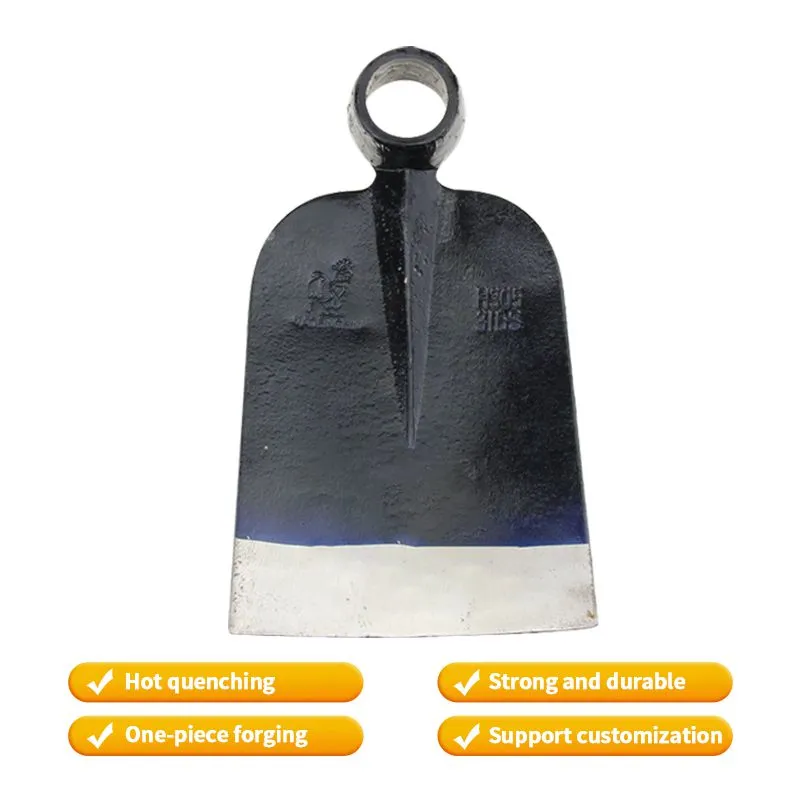
Hoe Head Weight Classes and Who Buys Them
Hoe heads are usually sorted into four weight bands, and each band has a natural buyer.
Light heads run from about 0.3 to 0.6 kg. They suit garden weeding and light soil work.
Medium heads run from about 0.7 to 1.0 kg. They are the general-purpose choice for mixed farming.
Heavy heads run from about 1.0 to 1.5 kg. They are built for land preparation and harder soil.
Extra heavy heads, from about 1.5 to 2.5 kg, belong to mattocks and grub hoes.
Weight is a trade-off. A heavier head strikes harder and penetrates better.
But it also tires the user faster, and it raises material cost and freight weight.
African smallholders often work with medium to heavy heads, around 0.8 to 1.2 kg.
European garden retail usually prefers light to medium heads, around 0.3 to 0.7 kg.
Ask your buyer what crop and what soil the tool will face. That answer sets the weight.
Weight also depends on the handle, because a heavier head needs a stronger handle.
A 1.4 kg head on a thin handle will break before the head wears out.
Always quote the head weight and the total tool weight together.
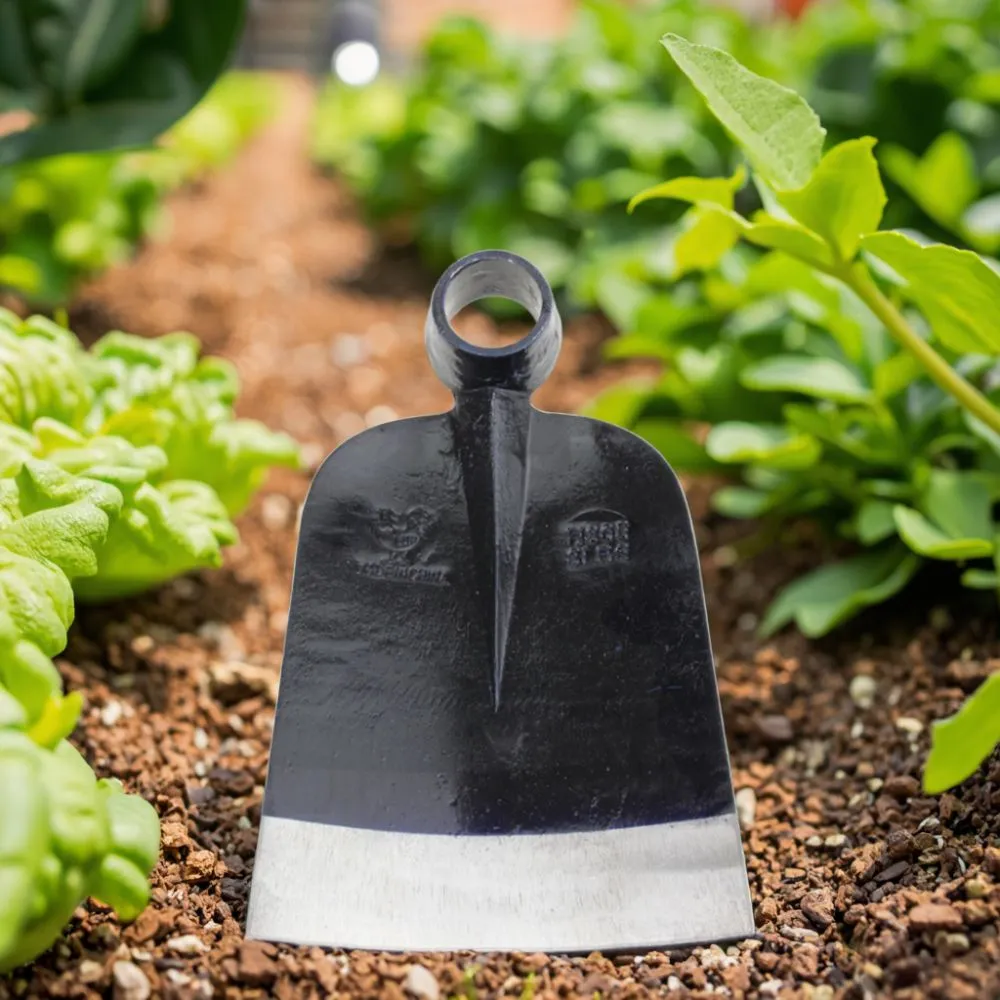
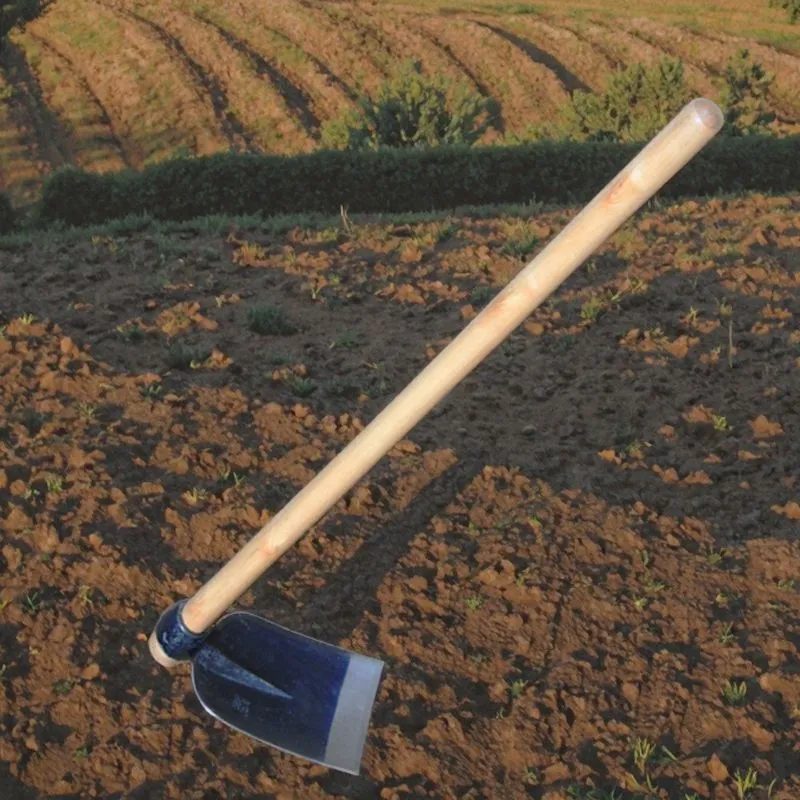
Blade Width, Thickness, and Cutting Angle
Blade width controls how much soil one stroke moves, and how fast you can work.
Narrow blades, roughly 8 to 12 cm wide, dig deep and cut through heavy soil.
They are also the standard for trenching and for working between plants.
Medium blades, roughly 12 to 16 cm, are the all-round size for general farming.
Wide blades, roughly 18 to 25 cm, move a lot of soil and speed up weeding and ridging.
Blade thickness decides how the hoe survives hard impacts.
Light stamped blades are often 2 to 3 mm thick, and they suit soft garden soil.
Forged blades are often 4 to 6 mm thick, and they take rocky ground and root cutting.
The cutting edge angle matters too. A sharper angle cuts better but dulls faster.
A typical edge angle sits between 30 and 45 degrees, depending on the soil.
Write the width, thickness, and angle into your specification, not just the weight.
Blade width also follows the eye position, which affects the balance of the tool.
An offset eye lets the blade cut flat without scraping the user's knuckles.
Ask for a dimensioned drawing, not only a photo, when you approve a model.
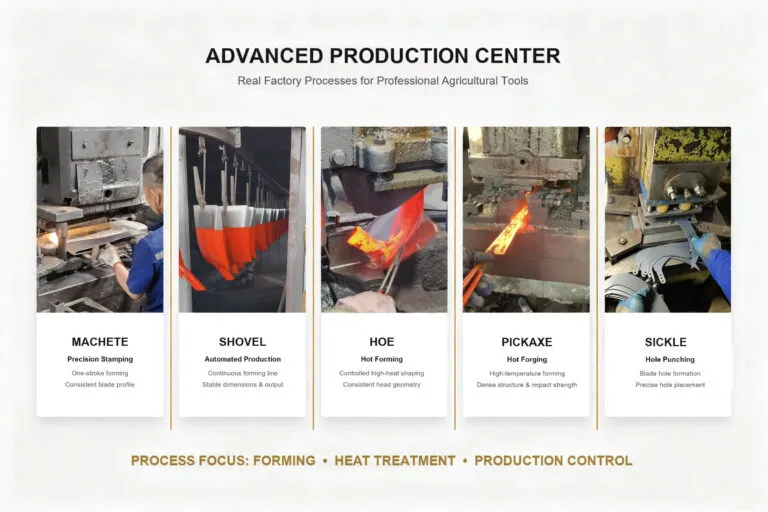
Market Fit: Africa, South Asia, Europe, and North America
Market fit is where most wrong orders come from.
African smallholder markets favor medium to heavy eye hoes with wooden handles.
Blade width often sits between 10 and 16 cm, for land preparation and weeding.
Ridging hoes with wider blades sell alongside them for row crops.
South Asian markets favor narrow, heavy digging hoes for paddy and vegetable work.
European garden retail wants lighter heads with narrower blades for weeding.
Dutch hoes and draw hoes in the 0.3 to 0.5 kg range dominate there.
North American garden centers buy heavier garden hoes, stirrup hoes, and hilling hoes.
Aid and government kits usually specify medium forged heads with fixed weights.
Always confirm the specification against the tender or customer document before production.
Retail packaging adds another layer, because the stated size must match the product.
Label the weight correctly on the box, or buyers will measure it themselves.
A wrong weight on the label is a small problem that creates large returns.
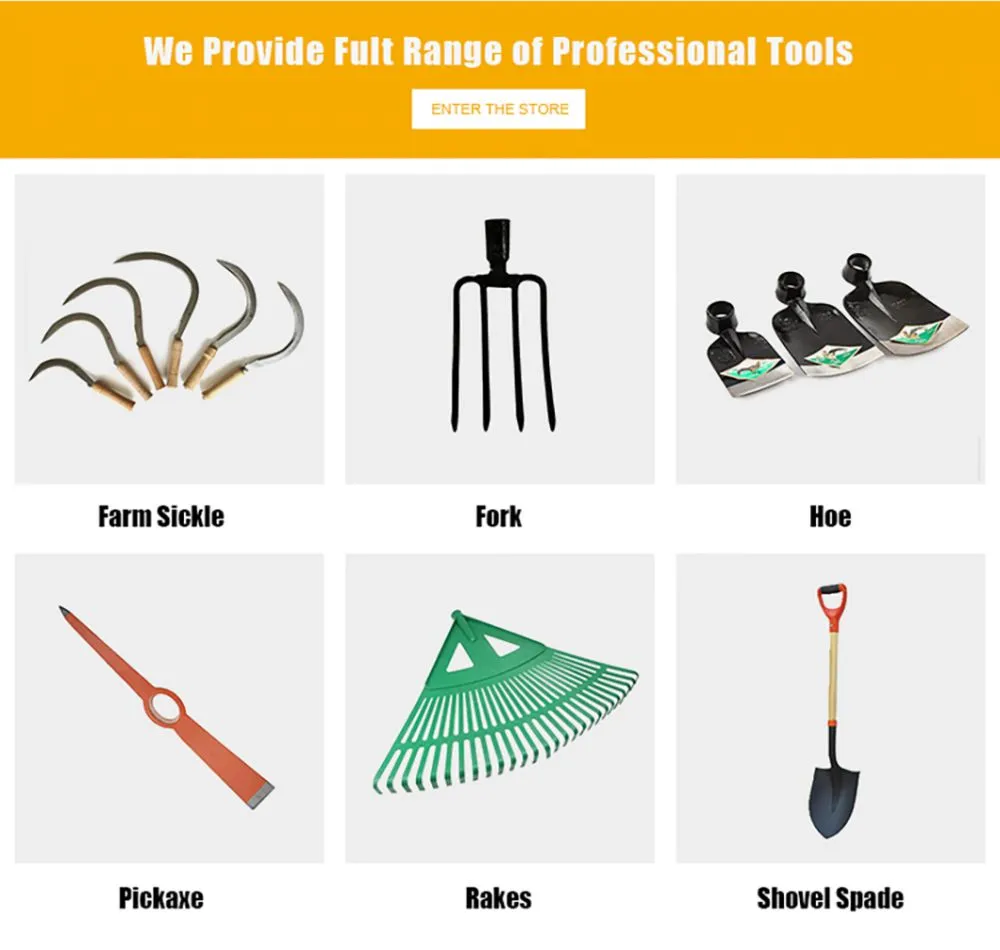
How Head and Blade Size Change Container Loading
Container loading is driven by volume, and handle length is the biggest factor.
A longer handle makes a longer carton, and a longer carton wastes container space.
Here is a simple example, using round numbers.
Say a carton of 12 hoes measures 125 by 35 by 20 cm. That is about 0.088 cubic meters.
A 20ft container offers roughly 28 cubic meters of usable space.
So you can load about 320 cartons, or around 3,800 hoes, in that example.
Change the handle from 120 cm to 90 cm, and the carton shortens, so more pieces fit.
Ship heads and handles separately in knocked-down form, and the gain can be much larger.
Remember that weight limits still apply. A container can run out of payload before volume.
Always ask for the carton size and the gross weight per carton with the quote.
Then calculate the cost per piece landed, including freight and import duty.
That number, not the FOB price, tells you which supplier and country win.
Recalculate it whenever the handle length or the carton changes.
Writing a Spec Sheet Your Factory Can Repeat
A repeatable spec sheet prevents drift between the sample and the bulk order.
List the head weight with a tolerance, such as 1.0 kg plus or minus 5 percent.
List the blade width, thickness, and cutting angle with their own tolerances.
List the steel grade, the hardness range in HRC, and the required heat treatment.
List the eye size, the handle diameter, the handle length, and the wood species.
Add the coating type, the color code, the packing quantity, and the carton size.
Attach a photo of the approved sample with a reference number.
Send this one page with every order, and ask the factory to confirm it in writing.
Buyers who keep a stable spec sheet get stable products, season after season.
Keep one master file, and quote the same file in every email to the factory.
When something must change, change it in the file first, then discuss it.
That habit prevents the small drift that ruins repeat orders.
Recently Posted
-
Best-Selling Hoe Models for Smallholder Farmers in Africa
October 15, 2026Best-Selling Hoe Models for Smallholder Farmers in AfricaAfrica is the largest single market for agricultural hand hoes in the wor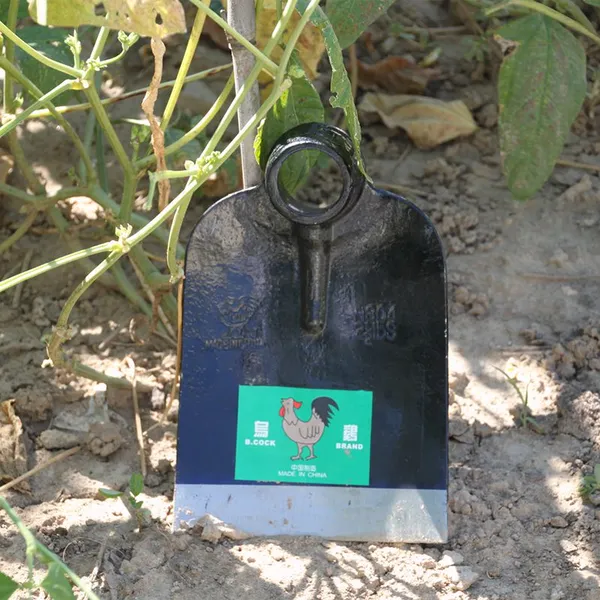 Read More
 -
Hoe Eye Shapes and Handle Diameters: How to Avoid Fitting Problems
October 15, 2026Hoe Eye Shapes and Handle Diameters: How to Avoid Fitting ProblemsA loose hoe head is one of the most common complaints in this pr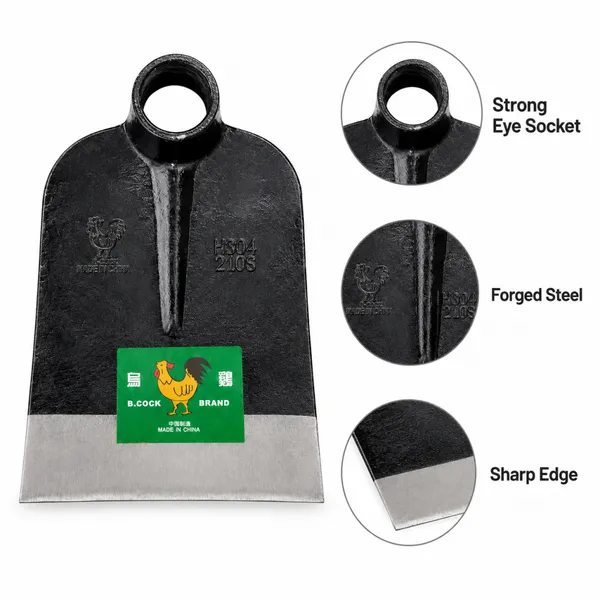 Read More
 -
Wood vs Fiberglass vs Steel Hoe Handles: A Wholesale Buyer's Comparison
October 15, 2026Wood vs Fiberglass vs Steel Hoe Handles: A Wholesale Buyer's ComparisonThe hoe head gets all the attention, but the handle dec Read More
 -
Hoe Types Explained: Dutch, Grub, Mattock and Ridging Hoes Compared
October 15, 2026Hoe Types Explained: Dutch, Grub, Mattock and Ridging Hoes ComparedA hoe is not one tool. It is a family of shapes, each built for Read More

Contact Us
Recommended Products
-
 Heavy Duty Cane Knife Machete for Wholesale Buyers Factory Direct Export for Rural Agricultural Projects Durable Hand ToolNegotiableMOQ: 1200 Pieces
 -
Agricultural Hoe Head Garden Rail Steel Tool for Tough Soil Cheap Price Hand ToolsUS$ 1.07 - 1.27MOQ: 1200 Pieces
-
Sturdy Rail Steel Hoe for Weeding, H305 Perfect for Agricultural and Garden TasksUS$ 1.07 - 1.27MOQ: 1200 Pieces
-
Heavy Duty Manganese Steel Garden Shovel Round Point Digging Shovel With Wooden Handle Farm Tool SupplierUS$ 2.14 - 2.36MOQ: 1200 Pieces
-
Big Shovel Wide Shovel Mud Shovel Heavy Duty Steel Blade for Farm Drainage Soil Moving Cleaning and Landscaping UseUS$ 2.14 - 2.36MOQ: 1200 Pieces





-
Strong Teeth Soil Rake for Farm Tool Suppliers Private Label Export for Farm Maintenance African Distribution Factory Bulk OrderUS$ 0.88 - 1.35MOQ: 2000 Pieces
-
Manual Cane Knife Machete for Wholesale Buyers Factory Direct Export for Rural Agricultural Projects Durable Hand ToolNegotiableMOQ: 1200 Pieces
-
Large High Carbon Steel Machete Knife Agricultural Machete for Farming Bush Cutting Garden Tool SupplierNegotiableMOQ: 1200 Pieces
-
Wholesale Heavy Duty Pick Mattock for Mining Road Work and Farm Digging for Wholesale Tool Dealers With Bulk Order ServiceUS$ 1.85 - 2.3MOQ: 1200 Pieces
-
Carbon Steel Manual Pickaxe for Hard Soil Breaking and Trenching for African Importers With OEM Bulk Order Support Agricultural ToolUS$ 1.85 - 2.3MOQ: 1200 Pieces





-
OEM Farm Sickle With Sharp Blade for African Importers OEM Bulk Order Support for Harvesting and Smallholder Farming for Wholesale BUS$ 0.28 - 0.33MOQ: 3000 Pieces
-
Heavy Duty Manganese Steel Round Point Shovel Garden Digging Shovel With Wooden Handle Agricultural Tool ManufacturerUS$ 2.14 - 2.36MOQ: 1200 Pieces
-
Farm Shovel Factory Supply for Regional Import Distributors Bulk Wholesale Supply for Garden Work and Trenching for Agricultural DealersUS$ 2.14 - 2.36MOQ: 1200 Pieces
-
Heavy Duty Garden Rake for African Importers OEM Factory Supply for Agricultural Use African Market Factory Bulk OrderUS$ 0.88 - 1.35MOQ: 2000 Pieces
-
Agricultural Soil Rake for Agricultural Dealers Export Supply for Garden Cleaning African Dealer Channels Factory Bulk OrderUS$ 0.88 - 1.35MOQ: 2000 Pieces





-
Manual Farm Machete for African Importers OEM Factory Supply for Farming and Land Clearing Durable Hand ToolNegotiableMOQ: 1200 Pieces
-
Large Heavy Duty Carbon Steel Garden Landscaping Digging HoeUS$ 1.07 - 1.27MOQ: 1200 Pieces
-
Heavy Duty Rail Steel Mattock Pick Axe With Wooden Handle for Digging Soil Mining and Agricultural Tool SupplierUS$ 1.85 - 2.3MOQ: 1200 Pieces
-
Forged Farm Sickle With Sharp Blade for African Importers OEM Bulk Order Support for Harvesting and Smallholder Farming for WholesalUS$ 0.28 - 0.33MOQ: 3000 Pieces
-
Strong Carbon Steel Farming Sickle for Uganda Tanzania Zambia Agricultural Tool DistributorsUS$ 0.34 - 0.47MOQ: 3000 Pieces





