


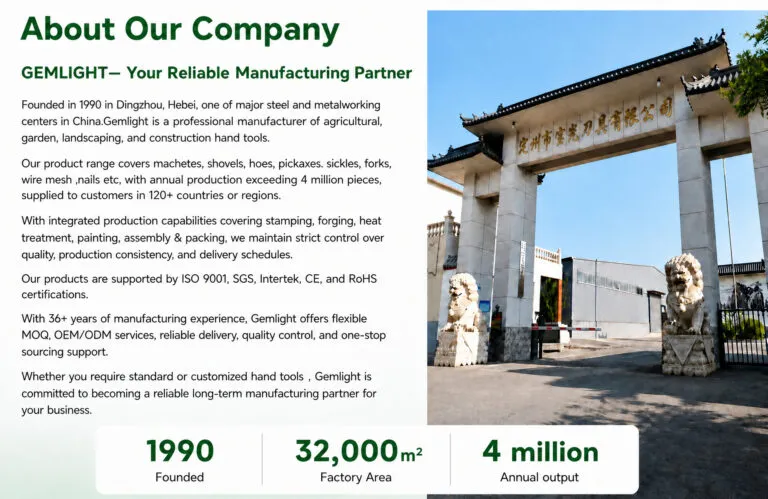
 Business License

Garden Hoe MOQ from China: Minimum Order, Mixed Containers and Trial Orders
Garden Hoe MOQ from China: Minimum Order, Mixed Containers and Trial Orders
MOQ is the first wall most new buyers hit. It is also the number most often misunderstood.
A minimum order quantity is not a rule from the factory. It is the point where their process stops losing money.
Once you understand where the number comes from, you can usually work around it.
This article explains the real minimums for hoe orders, and the practical ways to start small.
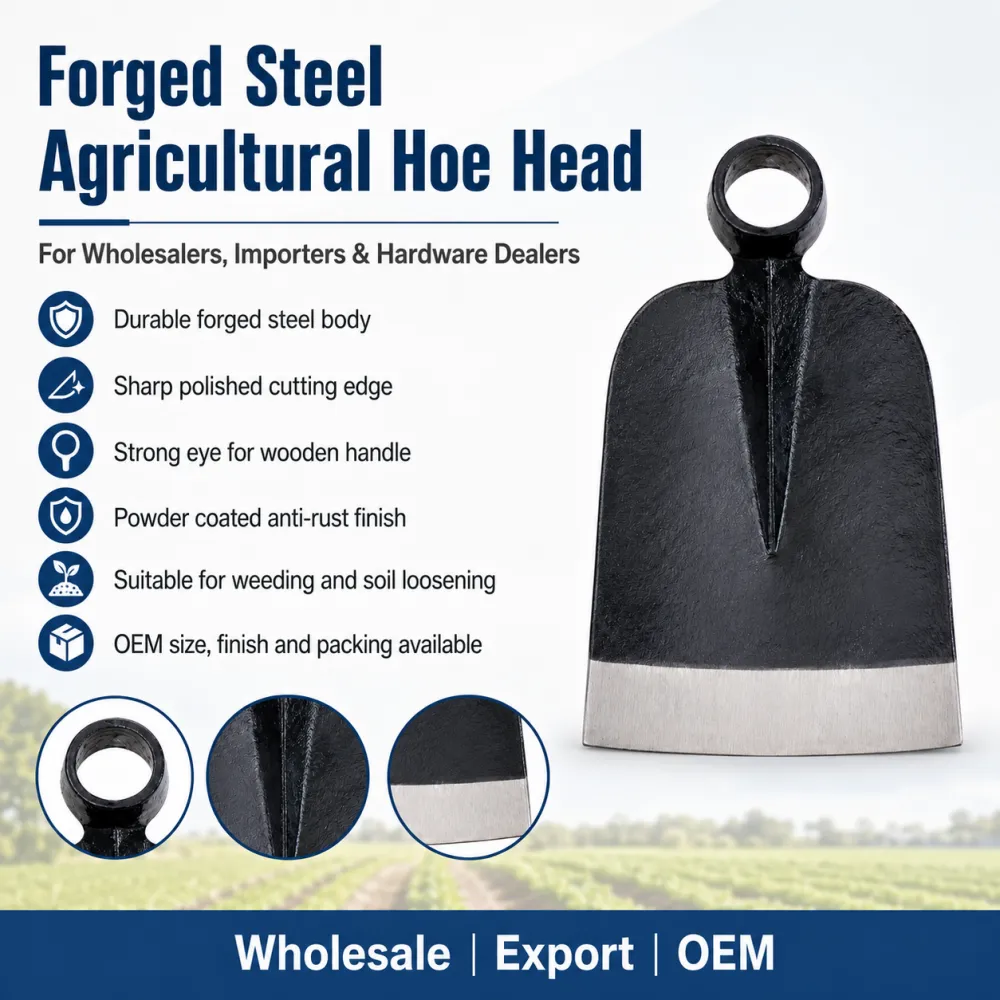
What MOQ Applies to Standard Hoe Models
For standard hoe models, quotes usually land between 500 and 3,000 pieces per model.
Many factories set a single order minimum, often around 3,000 to 5,000 pieces in total.
Inside that total, each model usually needs at least 500 to 1,000 pieces.
Simple garden hoes with stamped heads often carry the lowest minimums.
Heavy forged heads and mattocks usually carry higher minimums, because each size needs its own die.
Custom color, custom logo, or custom packaging lifts the minimum again.
Those steps need a separate setup, so the factory needs volume to justify it.
Always ask whether the MOQ is per model, per color, or per order.
The answer changes your planning completely.
Confirm the minimum in writing, including any separate minimum for color or packing.
A verbal answer here causes real problems when you send the purchase order.
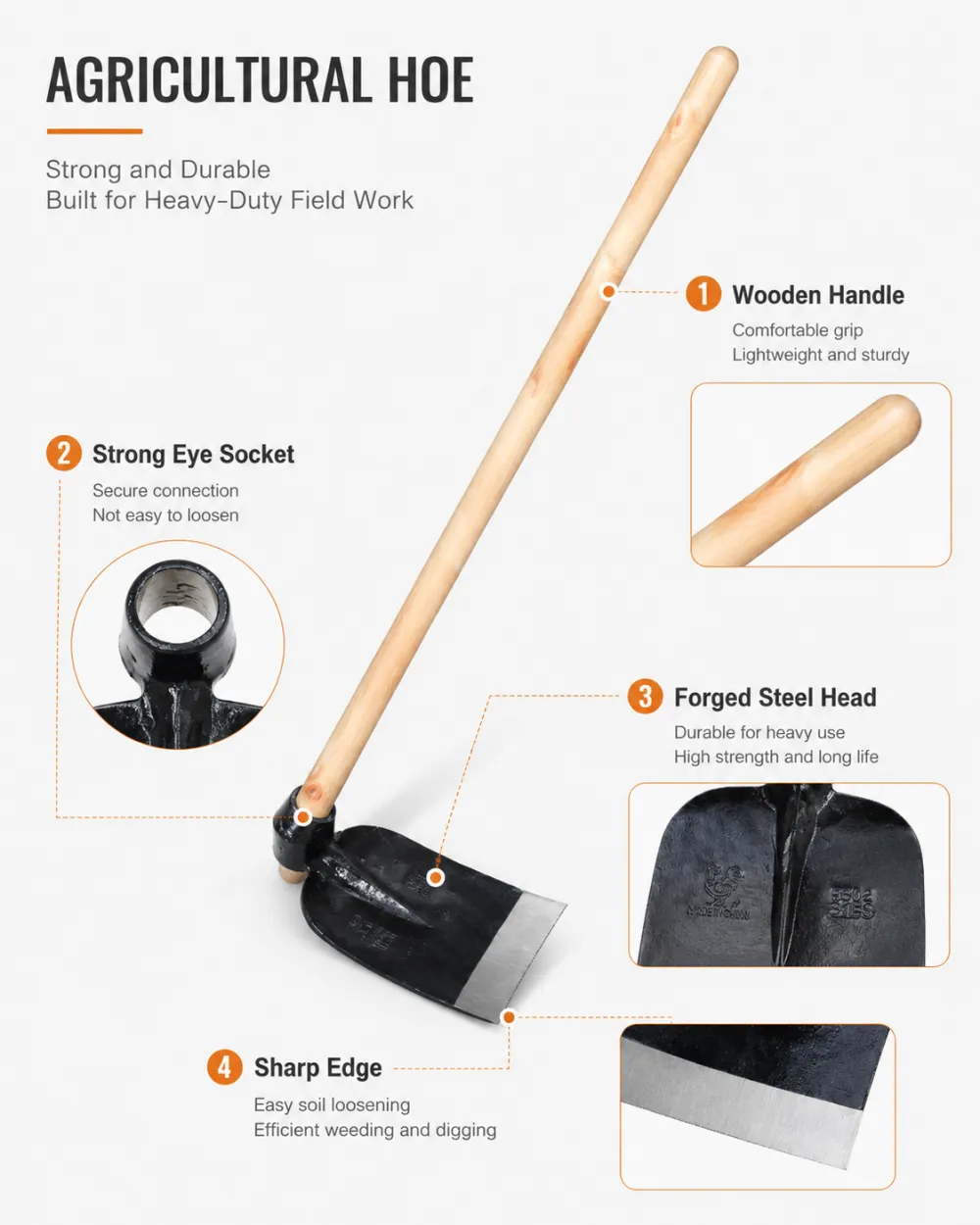
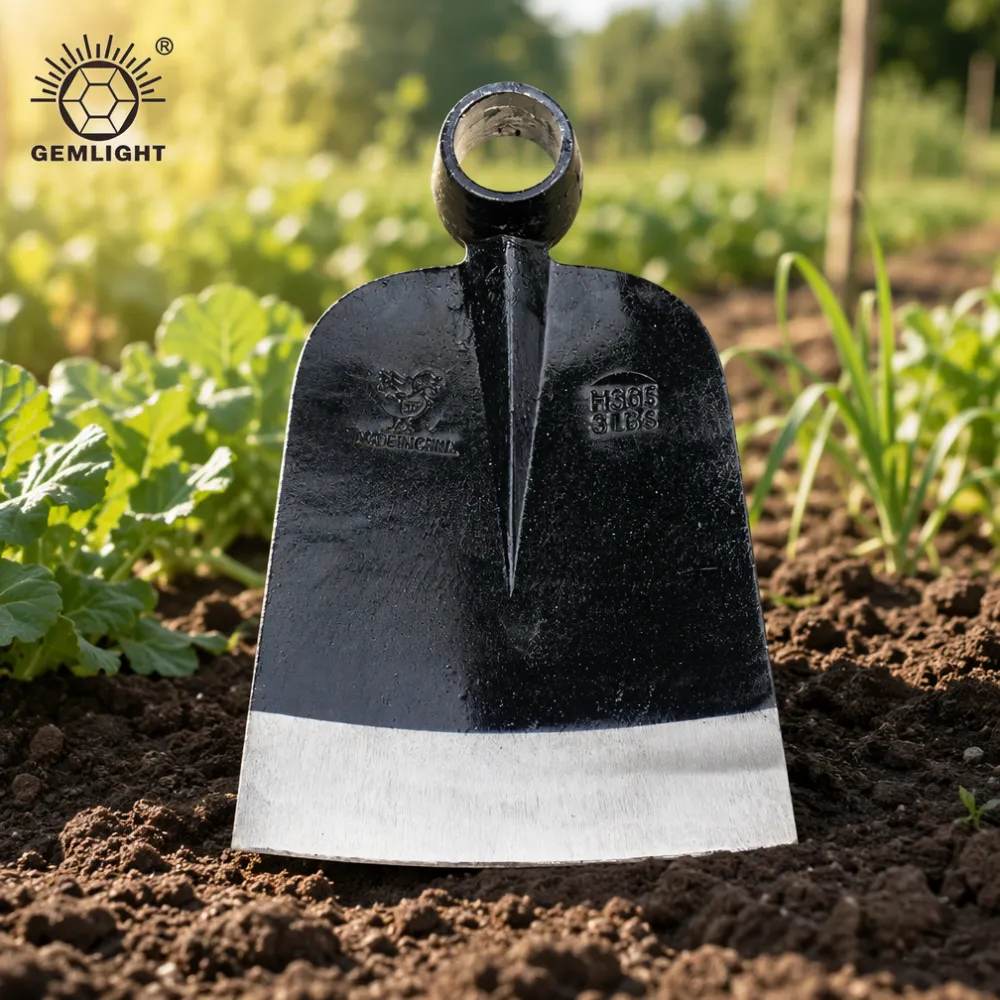
Where the MOQ Numbers Actually Come From
Minimums come from four real constraints, and none of them is about attitude.
The first is forging or stamping setup. A die change costs time and waste for the first pieces.
The second is heat treatment and coating batches. These run at a minimum load to be efficient.
The third is the handle order. Handle workshops sell in bundles, so a small order means buying extra.
The fourth is packaging. Printed cartons or labels often need their own print run.
A factory can usually bend on one of these, but not on all four at once.
When you understand which constraint is binding, negotiation gets much easier.
Ask the question directly: what is your real minimum, and what drives it?
Then ask which constraint they can relax for a first order, and which one they cannot.
Most factories will relax one, and the honest ones will tell you which.

Can You Mix Different Models in One Order
Mixed orders are normal in this industry, and most factories accept them.
The usual rule is a total order minimum, plus a smaller minimum for each model.
So a 5,000 piece order might allow five models at 1,000 pieces each.
Mixing works best when all models share the same steel, coating, and handle.
That keeps the batch process simple and avoids extra setups.
Mixing is less flexible with custom packaging, because each model needs its own print.
A mixed container also lets you test several markets at once.
One container might carry a grub hoe, a ridging hoe, a mattock, and a garden hoe.
Confirm the carton quantity per model before you calculate the loading plan.
Keep each model in its own carton, so warehouse staff can pick without opening boxes.
Mixing models inside one carton looks efficient but slows everything downstream.
How to Start With a Small Trial Order
You can start smaller than the full MOQ, if you accept the trade-offs.
The first option is a trial order price. You pay more per piece, but the quantity is low.
Some factories accept 1,000 to 2,000 pieces as a first order, then expect a larger second order.
The second option is standard packaging. Skipping custom print removes a whole minimum.
The third option is a stock model. Selling from existing stock avoids a new production run.
The fourth option is buying through a trader or a small workshop that accepts lower volumes.
You pay a margin, but you learn the market with less money at risk.
Whichever route you choose, pay through a traceable channel and inspect before shipment.
Never send a large deposit to a supplier you have not tested with a small order.
Treat the trial as paid research, and expect a higher price per piece than on bulk orders.
Then use the results to negotiate the second order with real data behind you.
Negotiating MOQ Without Losing Quality
There are fair ways to lower a minimum, and there are dangerous ones.
A fair way is to pay the setup cost directly. Offer to cover the die or print fee.
A fair way is to give a forecast in writing, with a firm second order attached.
A fair way is to accept a longer lead time, so your order fills a gap in their schedule.
A fair way is to accept standard cartons on the first run and custom packaging later.
A dangerous way is to push the factory to use cheaper steel to hit your price.
A dangerous way is to accept a thinner blade or a shorter handle without noticing.
Ask what changed when the price drops. A serious supplier will explain it clearly.
Write the agreed minimum, price, and specification into one document, and sign it.
Then keep that document with your samples, so the second order starts from a known base.
Review the minimum once a year, because factories grow and their policies change.
A long relationship usually buys flexibility that a new supplier will not offer.
Recently Posted
-
Documents Needed to Bid for a Hoe Supply Contract
October 16, 2026Documents Needed to Bid for a Hoe Supply ContractTender submissions are judged on documents before they are judged on price.A stro Read More
 -
Hoe Specifications in Aid and Emergency Tool Kits: What Tenders Require
October 16, 2026Hoe Specifications in Aid and Emergency Tool Kits: What Tenders RequireAid and emergency programs buy hoes by the tens of thousand Read More
 -
Winning Hoe and Hand Tool Tenders: A Supplier's Guide to Public Bids
October 16, 2026Winning Hoe and Hand Tool Tenders: A Supplier's Guide to Public BidsTender business looks attractive because volumes are large Read More
 -
How to Pack Hoes for Sea Shipment: Rust Prevention and Damage Control
October 16, 2026How to Pack Hoes for Sea Shipment: Rust Prevention and Damage ControlA hoe can pass every inspection at the factory and still arri Read More

Contact Us
Recommended Products
-
 Heavy Duty Cane Knife Machete for Wholesale Buyers Factory Direct Export for Rural Agricultural Projects Durable Hand ToolNegotiableMOQ: 1200 Pieces
 -
Agricultural Hoe Head Garden Rail Steel Tool for Tough Soil Cheap Price Hand ToolsUS$ 1.07 - 1.27MOQ: 1200 Pieces
-
Sturdy Rail Steel Hoe for Weeding, H305 Perfect for Agricultural and Garden TasksUS$ 1.07 - 1.27MOQ: 1200 Pieces
-
Heavy Duty Manganese Steel Garden Shovel Round Point Digging Shovel With Wooden Handle Farm Tool SupplierUS$ 2.14 - 2.36MOQ: 1200 Pieces
-
Big Shovel Wide Shovel Mud Shovel Heavy Duty Steel Blade for Farm Drainage Soil Moving Cleaning and Landscaping UseUS$ 2.14 - 2.36MOQ: 1200 Pieces





-
Strong Teeth Soil Rake for Farm Tool Suppliers Private Label Export for Farm Maintenance African Distribution Factory Bulk OrderUS$ 0.88 - 1.35MOQ: 2000 Pieces
-
Manual Cane Knife Machete for Wholesale Buyers Factory Direct Export for Rural Agricultural Projects Durable Hand ToolNegotiableMOQ: 1200 Pieces
-
Large High Carbon Steel Machete Knife Agricultural Machete for Farming Bush Cutting Garden Tool SupplierNegotiableMOQ: 1200 Pieces
-
Wholesale Heavy Duty Pick Mattock for Mining Road Work and Farm Digging for Wholesale Tool Dealers With Bulk Order ServiceUS$ 1.85 - 2.3MOQ: 1200 Pieces
-
Carbon Steel Manual Pickaxe for Hard Soil Breaking and Trenching for African Importers With OEM Bulk Order Support Agricultural ToolUS$ 1.85 - 2.3MOQ: 1200 Pieces





-
OEM Farm Sickle With Sharp Blade for African Importers OEM Bulk Order Support for Harvesting and Smallholder Farming for Wholesale BUS$ 0.28 - 0.33MOQ: 3000 Pieces
-
Heavy Duty Manganese Steel Round Point Shovel Garden Digging Shovel With Wooden Handle Agricultural Tool ManufacturerUS$ 2.14 - 2.36MOQ: 1200 Pieces
-
Farm Shovel Factory Supply for Regional Import Distributors Bulk Wholesale Supply for Garden Work and Trenching for Agricultural DealersUS$ 2.14 - 2.36MOQ: 1200 Pieces
-
Heavy Duty Garden Rake for African Importers OEM Factory Supply for Agricultural Use African Market Factory Bulk OrderUS$ 0.88 - 1.35MOQ: 2000 Pieces
-
Agricultural Soil Rake for Agricultural Dealers Export Supply for Garden Cleaning African Dealer Channels Factory Bulk OrderUS$ 0.88 - 1.35MOQ: 2000 Pieces





-
Manual Farm Machete for African Importers OEM Factory Supply for Farming and Land Clearing Durable Hand ToolNegotiableMOQ: 1200 Pieces
-
Large Heavy Duty Carbon Steel Garden Landscaping Digging HoeUS$ 1.07 - 1.27MOQ: 1200 Pieces
-
Heavy Duty Rail Steel Mattock Pick Axe With Wooden Handle for Digging Soil Mining and Agricultural Tool SupplierUS$ 1.85 - 2.3MOQ: 1200 Pieces
-
Forged Farm Sickle With Sharp Blade for African Importers OEM Bulk Order Support for Harvesting and Smallholder Farming for WholesalUS$ 0.28 - 0.33MOQ: 3000 Pieces
-
Strong Carbon Steel Farming Sickle for Uganda Tanzania Zambia Agricultural Tool DistributorsUS$ 0.34 - 0.47MOQ: 3000 Pieces





