


 Business License

Forged vs Stamped Hoe Heads: Which One Should You Import?
Forged vs Stamped Hoe Heads: Which One Should You Import?
Ask any two suppliers about forged and stamped heads, and you get two different answers.
One calls forging the only professional choice. The other calls stamping the smart, modern choice.
Both are partly right, because each process suits a different job and a different price point.
This article explains the difference in plain terms, so you can decide with your market in mind.
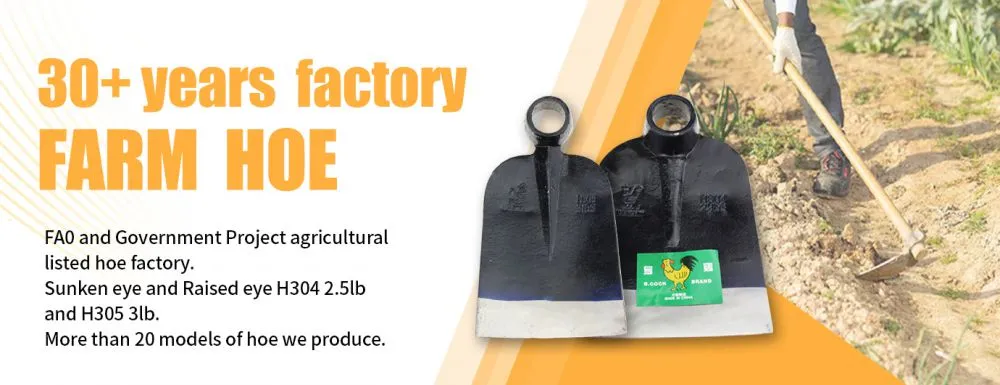
How Forging and Stamping Actually Work
Forging starts with a steel billet, cut to a set weight. It is heated until soft and shaped under a hammer or press.
The metal grains flow to follow the shape of the head. This makes the finished part denser and tougher.
Forged heads can be thicker at the neck and edge, where stress concentrates during digging.
Stamping starts with steel sheet or plate. A die cuts and presses the shape in one or two fast steps.
The blade keeps a fairly even thickness, because it comes from a flat sheet.
Stamping is much faster and cheaper per piece, which is why it dominates light garden tools.
Both processes can be followed by heat treatment. The difference is the starting metal, not only the machine.
Heat treatment raises hardness, and it also makes the steel more brittle.
The balance between hardness and toughness decides how a head behaves in use.
Factory workers often call this the temper, and it varies between suppliers.
Ask for a hardness range, not just the word "hardened".
Forging also wastes less material at the cutting stage, because the shape starts close to final.
Stamping produces more offcuts, which partly explains its lower material efficiency.

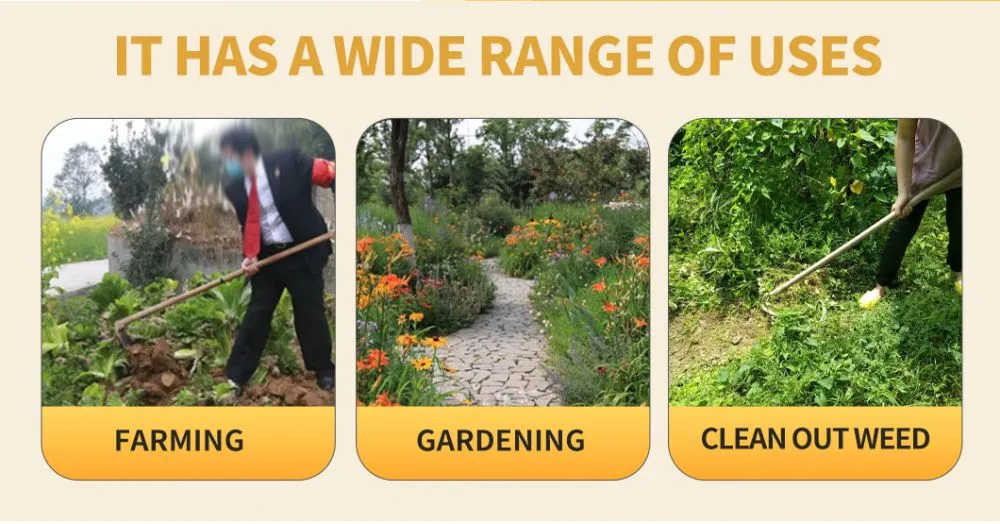
Strength and Wear in Real Field Conditions
In rocky or compacted soil, a hoe takes hard blows and side loads.
A forged head bends less and chips less, because the grain follows the tool's shape.
A stamped head is strong in its flat plane, but it can bend when you pry sideways.
For heavy digging and clearing roots, forgings win on durability.
For light weeding in soft garden beds, a stamped head is perfectly strong enough.
Wear matters too. A thick forged edge stays sharp longer, while a thin stamped edge wears faster.
The difference is real, but it only shows up in the conditions each tool was designed for.
Handle choice changes this picture too, because a loose head fails before the steel does.
A forged head on a poor handle still ends up as a complaint.
Weight also matters. A heavier head penetrates hard soil with less effort.
That is why farmers in dry regions often prefer heavier forged tools.
Lighter stamped hoes suit gardeners who work for an hour at a time.
Match the tool to the user's working day, not only to the soil type.
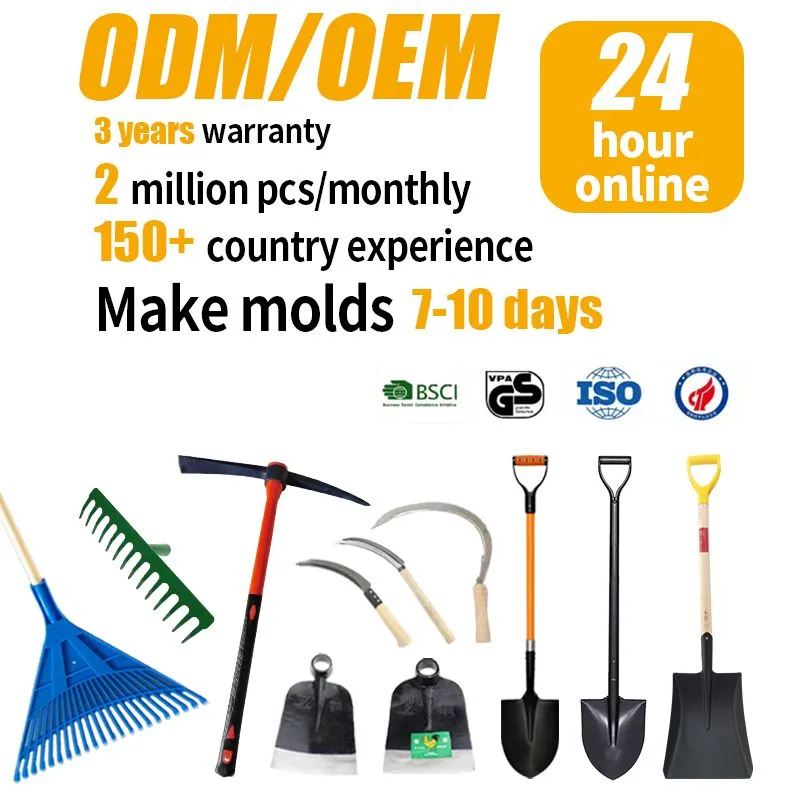
The Cost Gap and Its Effect on Retail Price
Stamping costs less because the material is lighter and the cycle time is short.
Forging costs more, because it uses more steel, more energy, and longer press time.
At the factory gate, a forged head can cost 30 to 60 percent more than a similar stamped head.
That gap grows at retail, where a forged hoe is sold as a premium product.
Stamped hoes fit the value shelf, the seasonal promotional line, and the first-time garden buyer.
Forged hoes fit the professional range, the agricultural line, and the "buy it once" customer.
Your margin story should match. Premium positions need a forged head and a story about it.
Shipping weight is another hidden cost. A heavier head raises freight per unit.
On a full container, the difference can reach a few percent of landed cost.
Coating and packing costs are roughly the same for both processes.
So the gap shrinks a little once the goods land in your warehouse.
Ask for quotes on a landed basis, not only FOB, before you compare.
Then decide which shelf the product belongs on.
How to Test Both Before You Commit
Do not choose from photos. Order one sample of each and compare them side by side.
Check the weight first. A forged head of the same size usually weighs more.
Measure the thickness at the blade edge, the middle, and the neck. Note where each is strong or thin.
Run a simple file test on the edge. A properly heat-treated head should resist the file's bite.
Tap the head and listen. A forged head often rings longer and cleaner than a stamped one.
Try a bend test on scrap, not on your sample. See how much force each takes before it stays bent.
Then ask the supplier for the steel grade and the hardness range in writing.
Compare the two quotes against your retail price target, not only against each other.
Also compare the eye and the handle, because a strong head needs a strong fitting.
Check that the eye is clean and the handle sits without wobble.
Ask how each head resists rust during a long sea voyage.
Coating quality matters more than logos on a tool that lives outdoors.
Record every result in your own file, so reorders stay consistent.
Which Buyer Should Choose Which
Choose forged heads when your customer digs in hard, rocky, or compacted soil.
They also suit African smallholder farmers, land preparation, and any "buy once" market.
Choose stamped heads for light garden weeding, promotional lines, and price-sensitive retail.
European garden retail often mixes both: a stamped Dutch hoe for weeding, a forged grub hoe for digging.
Aid and government kits almost always specify forged heads, for strength and long service life.
The smart importer carries both. Let the soil and the price point decide the process.
Ask your factory to quote the same drawing in both processes. The numbers will make the choice clear.
Test the first bulk batch the same way you tested the samples.
Measure ten heads, weigh them, and check the hardness of three.
If the batch drifts from the sample, raise it before the container leaves.
That habit keeps quality stable across seasons and across suppliers.
In the end, this is a commercial choice, not a technical contest.
Both processes work. What matters is matching the tool to the buyer
Recently Posted
-
Best-Selling Hoe Models for Smallholder Farmers in Africa
October 15, 2026Best-Selling Hoe Models for Smallholder Farmers in AfricaAfrica is the largest single market for agricultural hand hoes in the wor Read More
 -
Hoe Eye Shapes and Handle Diameters: How to Avoid Fitting Problems
October 15, 2026Hoe Eye Shapes and Handle Diameters: How to Avoid Fitting ProblemsA loose hoe head is one of the most common complaints in this pr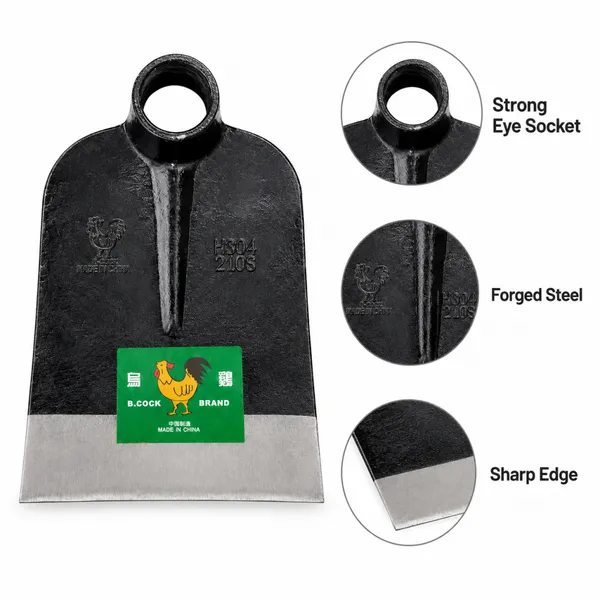 Read More
 -
Choosing Hoe Head Weight and Blade Size for Different Markets
October 15, 2026Choosing Hoe Head Weight and Blade Size for Different MarketsTwo hoes can look identical in a catalog photo and sell completely di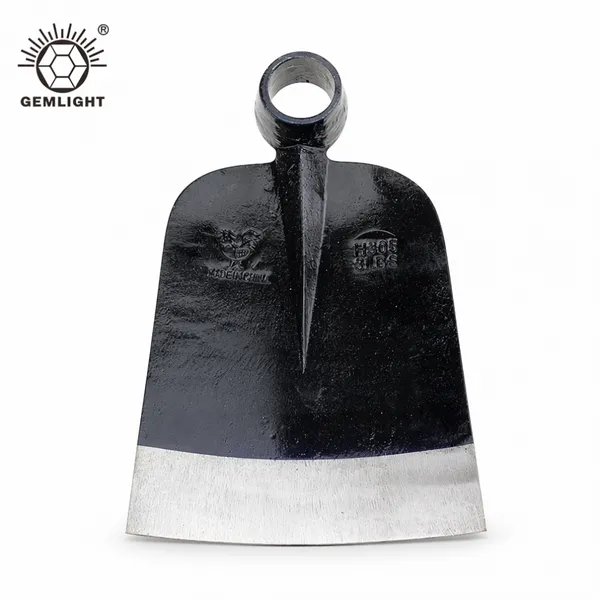 Read More
 -
Wood vs Fiberglass vs Steel Hoe Handles: A Wholesale Buyer's Comparison
October 15, 2026Wood vs Fiberglass vs Steel Hoe Handles: A Wholesale Buyer's ComparisonThe hoe head gets all the attention, but the handle dec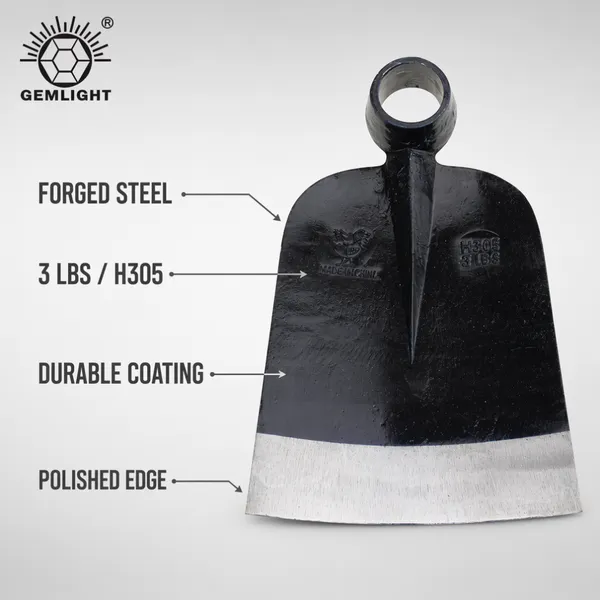 Read More

Contact Us
Recommended Products
-
 Heavy Duty Cane Knife Machete for Wholesale Buyers Factory Direct Export for Rural Agricultural Projects Durable Hand ToolNegotiableMOQ: 1200 Pieces
 -
Agricultural Hoe Head Garden Rail Steel Tool for Tough Soil Cheap Price Hand ToolsUS$ 1.07 - 1.27MOQ: 1200 Pieces
-
Sturdy Rail Steel Hoe for Weeding, H305 Perfect for Agricultural and Garden TasksUS$ 1.07 - 1.27MOQ: 1200 Pieces
-
Heavy Duty Manganese Steel Garden Shovel Round Point Digging Shovel With Wooden Handle Farm Tool SupplierUS$ 2.14 - 2.36MOQ: 1200 Pieces
-
Big Shovel Wide Shovel Mud Shovel Heavy Duty Steel Blade for Farm Drainage Soil Moving Cleaning and Landscaping UseUS$ 2.14 - 2.36MOQ: 1200 Pieces





-
Strong Teeth Soil Rake for Farm Tool Suppliers Private Label Export for Farm Maintenance African Distribution Factory Bulk OrderUS$ 0.88 - 1.35MOQ: 2000 Pieces
-
Manual Cane Knife Machete for Wholesale Buyers Factory Direct Export for Rural Agricultural Projects Durable Hand ToolNegotiableMOQ: 1200 Pieces
-
Large High Carbon Steel Machete Knife Agricultural Machete for Farming Bush Cutting Garden Tool SupplierNegotiableMOQ: 1200 Pieces
-
Wholesale Heavy Duty Pick Mattock for Mining Road Work and Farm Digging for Wholesale Tool Dealers With Bulk Order ServiceUS$ 1.85 - 2.3MOQ: 1200 Pieces
-
Carbon Steel Manual Pickaxe for Hard Soil Breaking and Trenching for African Importers With OEM Bulk Order Support Agricultural ToolUS$ 1.85 - 2.3MOQ: 1200 Pieces





-
OEM Farm Sickle With Sharp Blade for African Importers OEM Bulk Order Support for Harvesting and Smallholder Farming for Wholesale BUS$ 0.28 - 0.33MOQ: 3000 Pieces
-
Heavy Duty Manganese Steel Round Point Shovel Garden Digging Shovel With Wooden Handle Agricultural Tool ManufacturerUS$ 2.14 - 2.36MOQ: 1200 Pieces
-
Farm Shovel Factory Supply for Regional Import Distributors Bulk Wholesale Supply for Garden Work and Trenching for Agricultural DealersUS$ 2.14 - 2.36MOQ: 1200 Pieces
-
Heavy Duty Garden Rake for African Importers OEM Factory Supply for Agricultural Use African Market Factory Bulk OrderUS$ 0.88 - 1.35MOQ: 2000 Pieces
-
Agricultural Soil Rake for Agricultural Dealers Export Supply for Garden Cleaning African Dealer Channels Factory Bulk OrderUS$ 0.88 - 1.35MOQ: 2000 Pieces





-
Manual Farm Machete for African Importers OEM Factory Supply for Farming and Land Clearing Durable Hand ToolNegotiableMOQ: 1200 Pieces
-
Large Heavy Duty Carbon Steel Garden Landscaping Digging HoeUS$ 1.07 - 1.27MOQ: 1200 Pieces
-
Heavy Duty Rail Steel Mattock Pick Axe With Wooden Handle for Digging Soil Mining and Agricultural Tool SupplierUS$ 1.85 - 2.3MOQ: 1200 Pieces
-
Forged Farm Sickle With Sharp Blade for African Importers OEM Bulk Order Support for Harvesting and Smallholder Farming for WholesalUS$ 0.28 - 0.33MOQ: 3000 Pieces
-
Strong Carbon Steel Farming Sickle for Uganda Tanzania Zambia Agricultural Tool DistributorsUS$ 0.34 - 0.47MOQ: 3000 Pieces





