
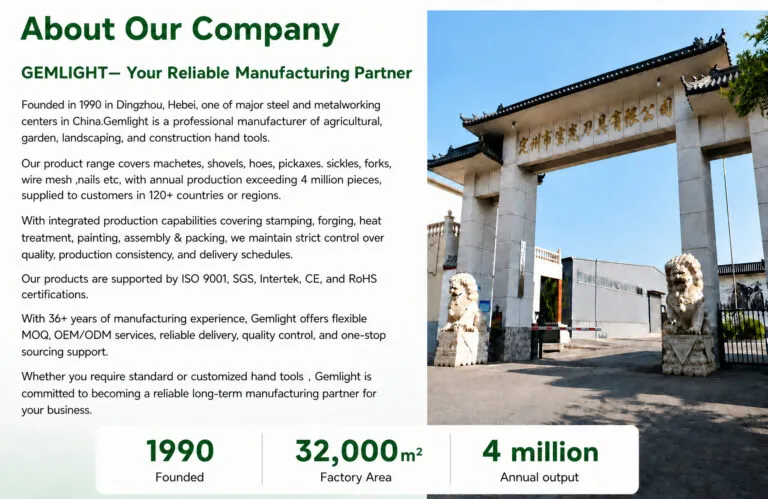
 Business License

How Sickle Prices Are Calculated: Cost Breakdown
How Sickle Prices Are Calculated: Cost Breakdown
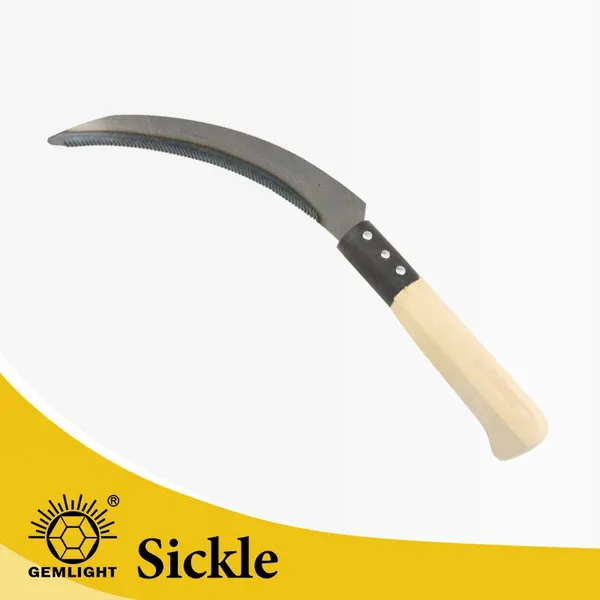
Two suppliers quote the same sickle at very different prices. One is not necessarily cheating you. The quotes may describe different blades, different packing or different payment risk.
Understanding the cost build lets you compare offers on equal terms. This article breaks a sickle price into its parts and shows where the real differences hide.
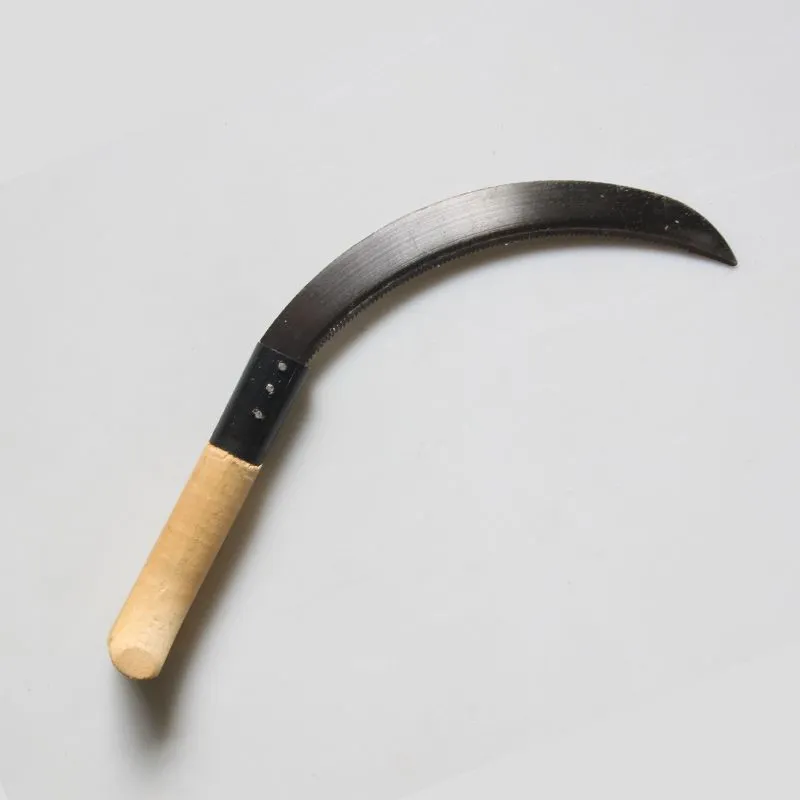
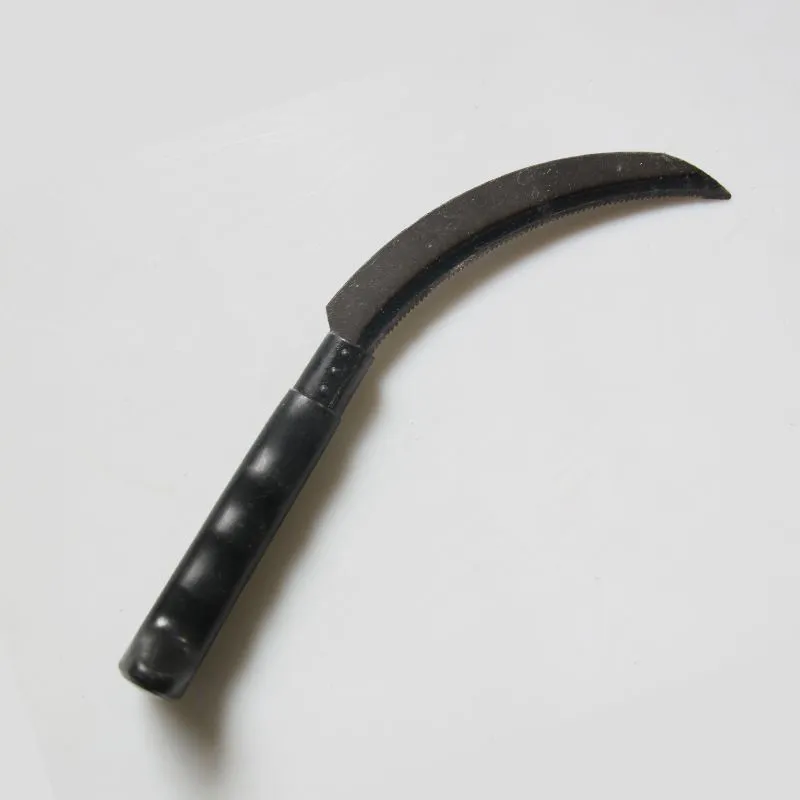
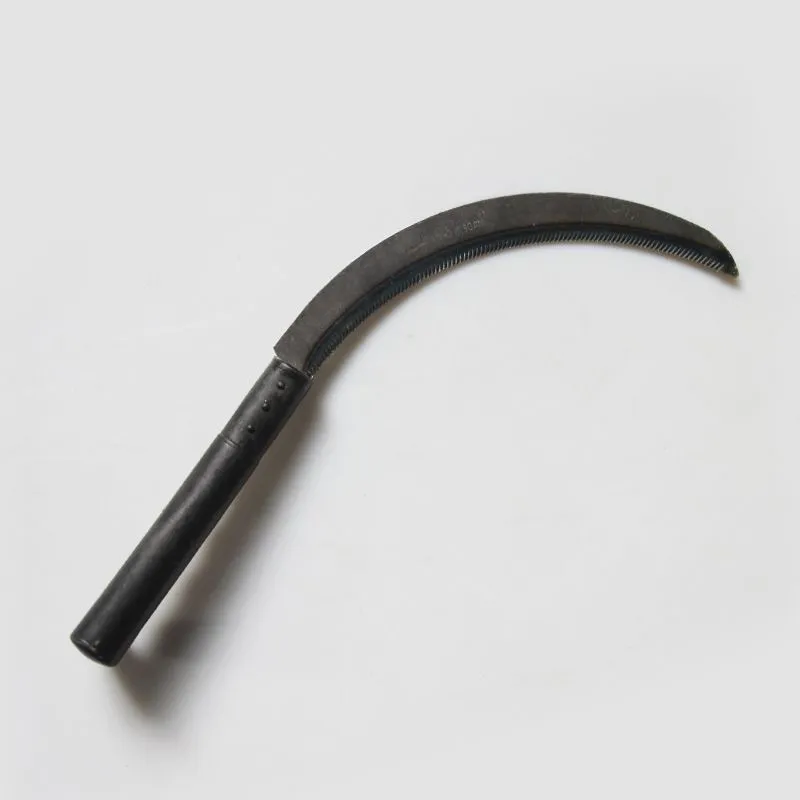
Which cost factors move the unit price most?
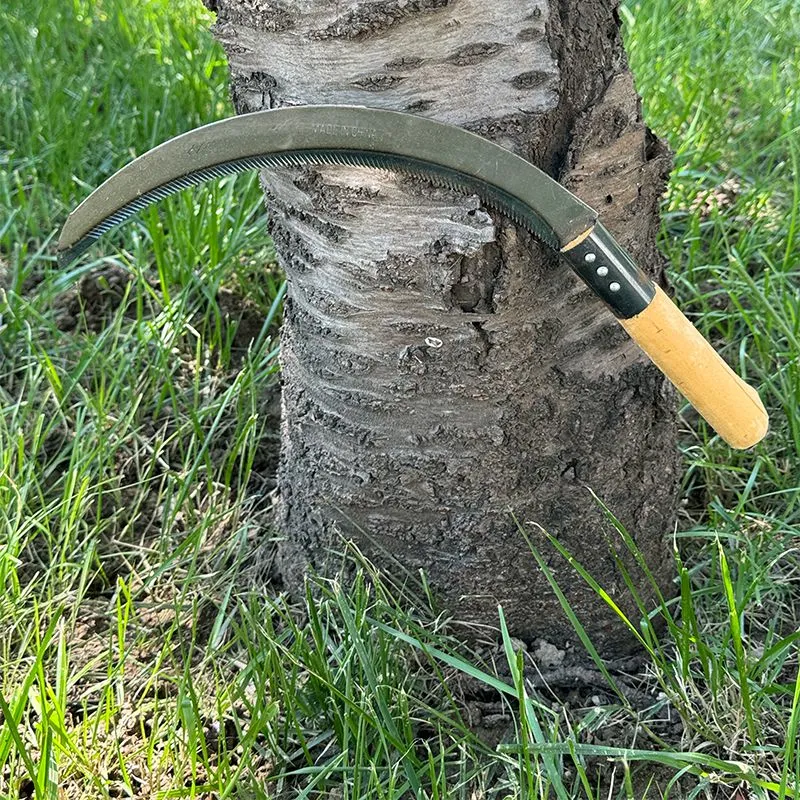
Steel is the largest material cost. A sickle blade is a piece of flat or forged steel, priced by weight.
Thicker blades and longer blades use more steel, so the price rises with both.
Blade thickness is often the hidden variable. Two suppliers may both quote 2.5 millimetres, but one measures at the spine and the other at the edge. The steel weight differs.
Labour comes next, and grinding is the biggest part of it. A blade needs several passes to form the bevel. A finer edge means more passes and slower output.
Heat treatment adds cost but also quality. A controlled furnace run with recorded temperature and tempering is not free. Skipping it saves money and creates complaints.
The handle is a real cost, especially wood. A hardwood handle can approach the cost of the blade itself. Plastic is cheaper and more consistent.
Packing, cartons and printing add a small but visible amount. Custom cards and blisters can double the packing cost.
Order quantity spreads setup costs. A 20,000 piece order carries a lower unit price than a 500 piece order for the same blade.
Why do two quotes for the same sickle differ?
Start with the steel grade. 65Mn, 55Si2Mn and plain carbon sheet all look similar in a photo. They behave differently and cost differently.
Check the actual dimensions. Ask for blade length, width and thickness in millimetres, measured on the sample. A "450 mm sickle" can be 430 mm in reality.
Check the heat treatment. A blade at 52 HRC with controlled tempering costs more than one at 45 HRC with no records.
Check the edge work. A ground and honed edge costs more than a rough grind. The difference shows up in the first hour of use.
Check the handle. Wood species, moisture content and ferrule type all move the price. So does a full tang versus a rat-tail tang.
Check the packing. A poly bag and a printed blister are different products at the retail shelf.
Check the terms. FOB, CIF and EXW quotes are not comparable. Payment terms, lead time and validity also change the price.
Exchange rate timing matters too. A quote issued three months ago may be stale.
Which upgrades are worth paying for?
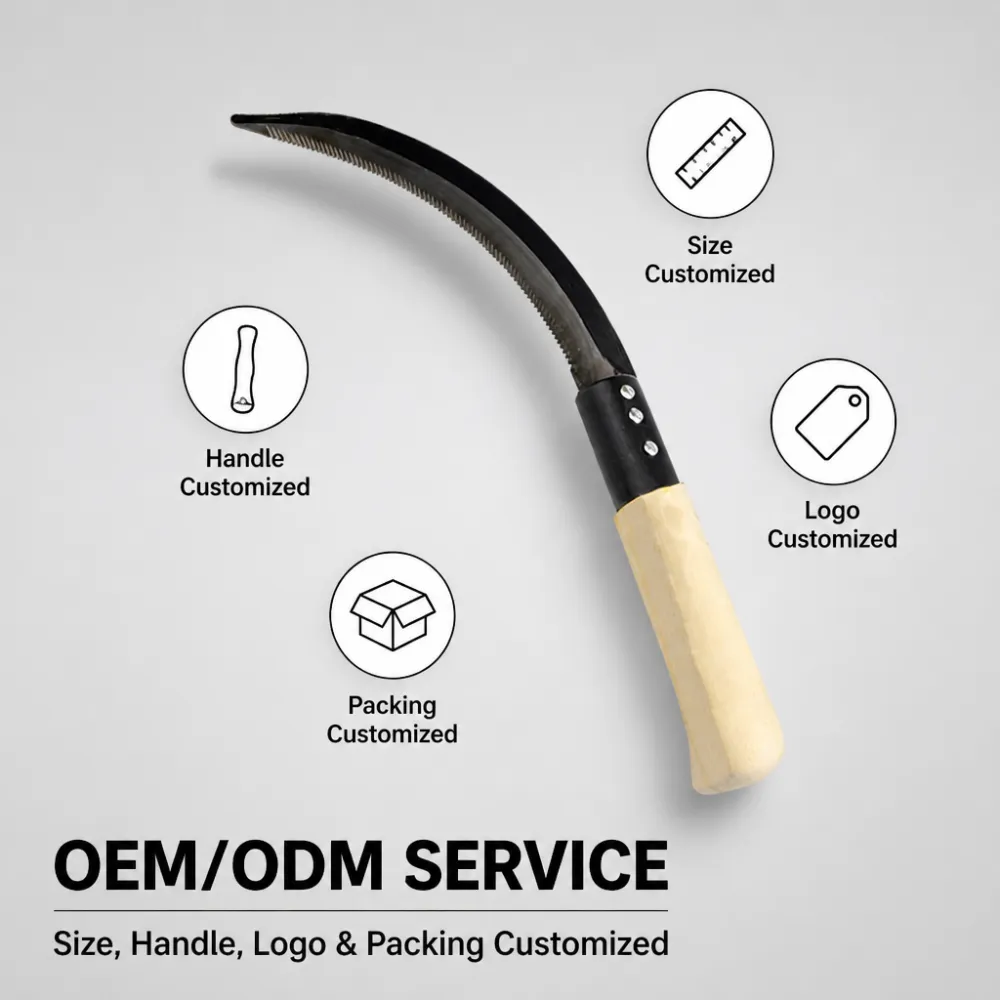
Some upgrades return their cost quickly. Others are decoration.
Controlled hardness is the first. A recorded heat treatment at a defined HRC range reduces breakage and complaints. The cost is small per piece and the benefit is large.
A full or half tang is the second. It spreads load into the handle and reduces the most common failure. Buyers who sell to daily users should pay for it.
A better handle is the third. Hardwood or a UV-stabilised plastic beats a soft wood handle that splits after a season.
Edge honing is the fourth. A honed edge cuts better out of the carton. Users judge the tool on the first cut, not on the fifth week.
Rust protection is the fifth for humid destinations. VCI paper and an oil film cost little and prevent ugly arrivals.
Packaging upgrades are worth it only where retail matters. A printed blister in a market that sells loose pieces is wasted money.
Custom blade shapes are rarely worth it on a first order. Standard shapes sell, and a new die adds cost and lead time.
How to read a quotation line by line?
A good quotation answers more than the price question.
Look for the model and the full specification. Blade length, thickness, steel grade, hardness, edge angle and handle should all appear.
Look for the packing detail. Units per carton, carton size, gross weight and shipping marks.
Look for the trade term and the named port. FOB Shanghai is specific. FOB China is not.
Look for the quantity basis. A price for 5,000 pieces does not apply to 500 pieces.
Look for the lead time, split into sample time and bulk time. A single number hides the real schedule.
Look for the payment terms and the validity date. A 30-day validity protects you from sudden steel moves.
Look for what is excluded. Tooling, testing, certification and inland freight are often extra.
Here is a simple illustration, using hypothetical numbers only. A basic sickle might carry roughly 0.25 to 0.35 US dollars of steel, similar labour, and a handle below 0.20 dollars.
Packing, overhead and margin complete the price.
The exact figures depend on size, volume and factory. Use the structure, not the numbers.
RFQ checklist for a comparable quote
Send these points so every quote describes the same product.
Model and full dimensions in millimetres
Steel grade and mill certificate
Hardness range in HRC
Edge angle, bevel type and honing
Handle material, length and tang type
Surface finish and rust protection
Packing format and units per carton
Carton dimensions and gross weight
Quantity tier for the quoted price
Trade term and named port
Lead time for sample and bulk
Payment terms and quote validity
Compare quotes on this table, not on the headline price. The cheapest number is often the most expensive blade.
Price is what you pay once. Cost is what you pay across the whole season.
Recently Posted
-
Documents to Bid for a Sickle Supply Contract
October 20, 2026Documents to Bid for a Sickle Supply ContractA tender is won or lost before the price is opened. Missing paperwork removes a bid w Read More
-
Sickle Specs in Aid and Government Tenders
October 20, 2026Sickle Specs in Aid and Government TendersTender buyers do not shop the way distributors do. They publish a document, and supplier Read More
-
Packing Sickles for Sea Shipment: Rust and Edge Care
October 20, 2026Packing Sickles for Sea Shipment: Rust and Edge CareA container crosses several climates before it reaches your warehouse. Steel b Read More
-
HS Code for Sickles (8201.90): Import Duty Guide
October 20, 2026HS Code for Sickles (8201.90): Import Duty GuideA wrong HS code creates two problems at once. You pay the wrong duty, and the ship Read More

Contact Us
Recommended Products
-
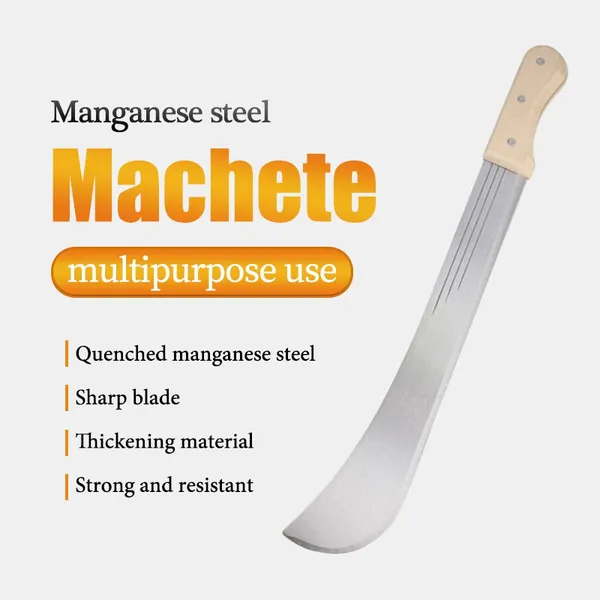
 Heavy Duty Cane Knife Machete for Wholesale Buyers Factory Direct Export for Rural Agricultural Projects Durable Hand ToolNegotiableMOQ: 1200 Pieces
-
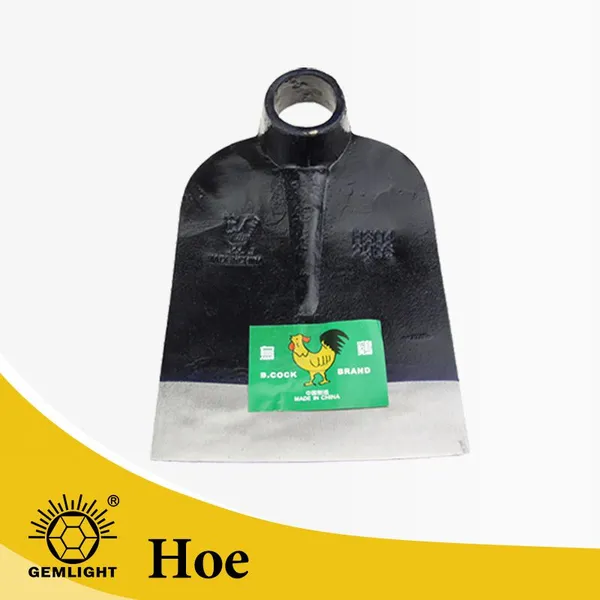
Agricultural Hoe Head Garden Rail Steel Tool for Tough Soil Cheap Price Hand ToolsUS$ 1.07 - 1.27MOQ: 1200 Pieces
-
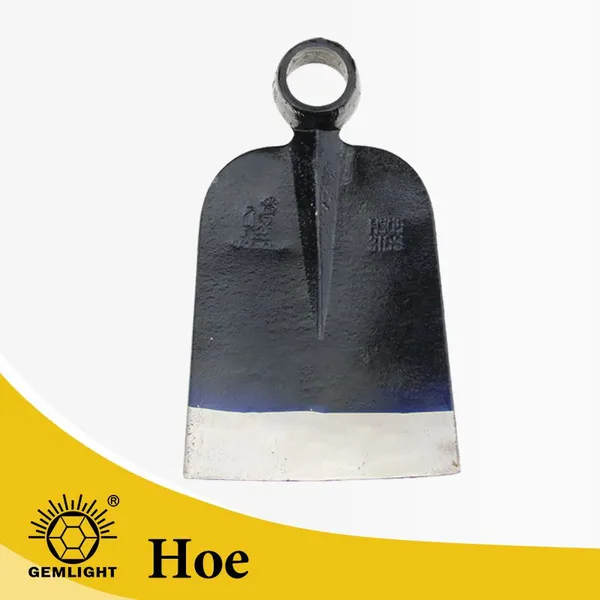
Sturdy Rail Steel Hoe for Weeding, H305 Perfect for Agricultural and Garden TasksUS$ 1.07 - 1.27MOQ: 1200 Pieces
-
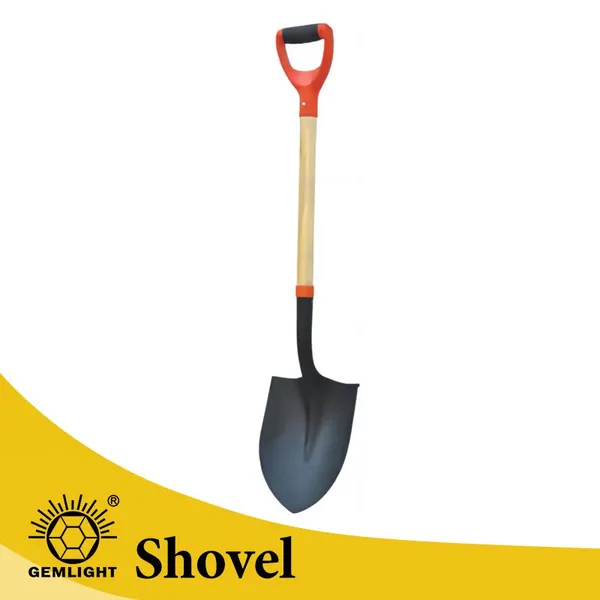
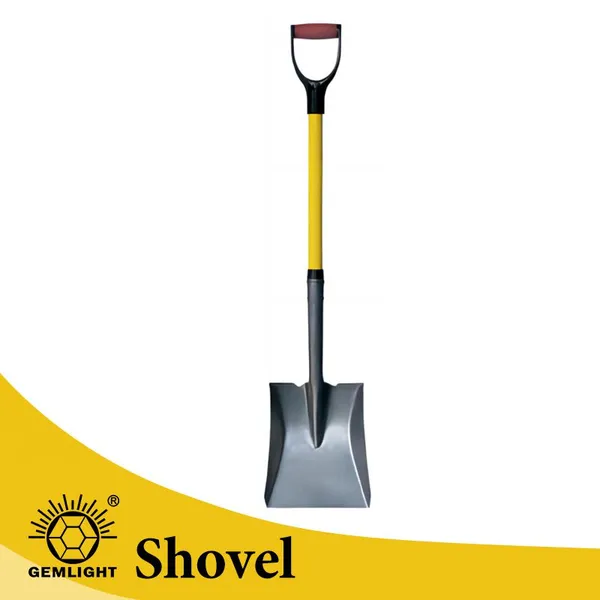
Heavy Duty Manganese Steel Garden Shovel Round Point Digging Shovel With Wooden Handle Farm Tool SupplierUS$ 2.14 - 2.36MOQ: 1200 Pieces
-
Big Shovel Wide Shovel Mud Shovel Heavy Duty Steel Blade for Farm Drainage Soil Moving Cleaning and Landscaping UseUS$ 2.14 - 2.36MOQ: 1200 Pieces
-
Strong Teeth Soil Rake for Farm Tool Suppliers Private Label Export for Farm Maintenance African Distribution Factory Bulk OrderUS$ 0.88 - 1.35MOQ: 2000 Pieces
-
Manual Cane Knife Machete for Wholesale Buyers Factory Direct Export for Rural Agricultural Projects Durable Hand ToolNegotiableMOQ: 1200 Pieces
-
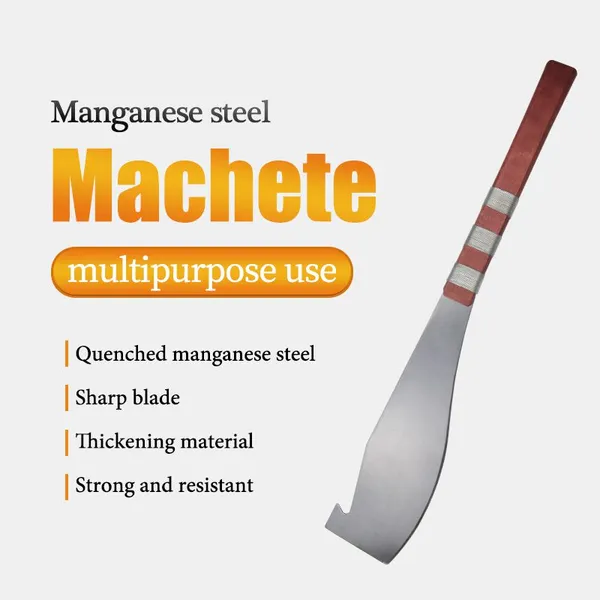
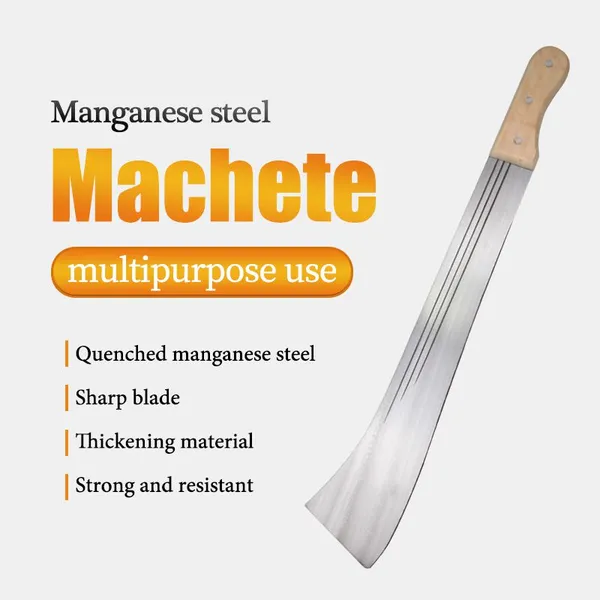
Large High Carbon Steel Machete Knife Agricultural Machete for Farming Bush Cutting Garden Tool SupplierNegotiableMOQ: 1200 Pieces
-
Wholesale Heavy Duty Pick Mattock for Mining Road Work and Farm Digging for Wholesale Tool Dealers With Bulk Order ServiceUS$ 1.85 - 2.3MOQ: 1200 Pieces
-
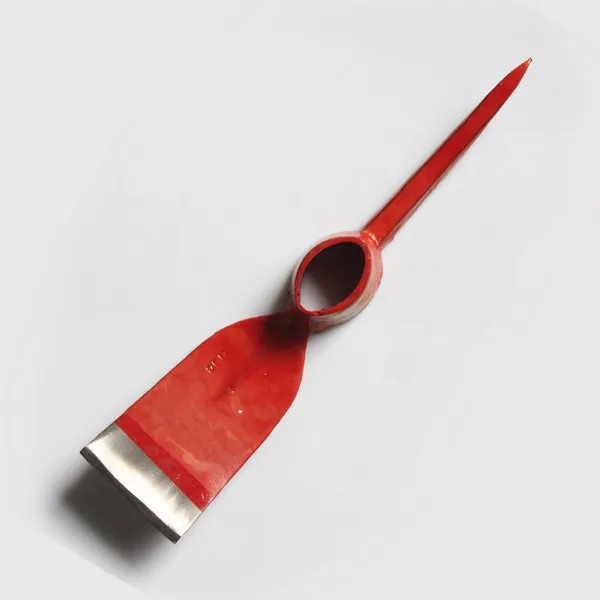
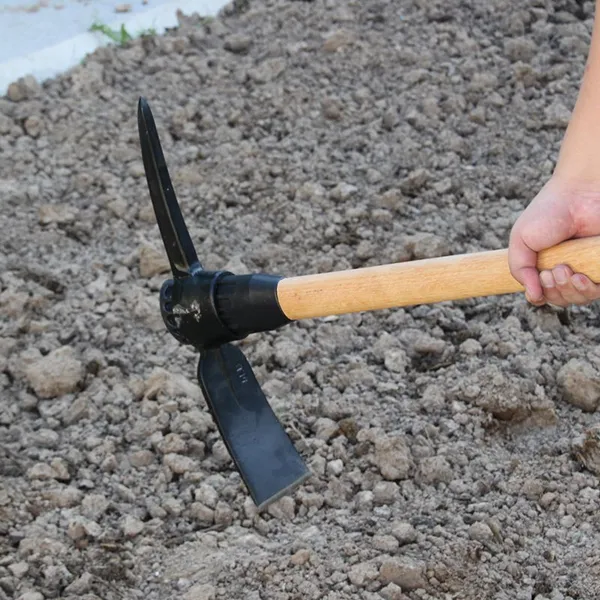
Carbon Steel Manual Pickaxe for Hard Soil Breaking and Trenching for African Importers With OEM Bulk Order Support Agricultural ToolUS$ 1.85 - 2.3MOQ: 1200 Pieces

-
OEM Farm Sickle With Sharp Blade for African Importers OEM Bulk Order Support for Harvesting and Smallholder Farming for Wholesale BUS$ 0.28 - 0.33MOQ: 3000 Pieces
-
Heavy Duty Manganese Steel Round Point Shovel Garden Digging Shovel With Wooden Handle Agricultural Tool ManufacturerUS$ 2.14 - 2.36MOQ: 1200 Pieces
-
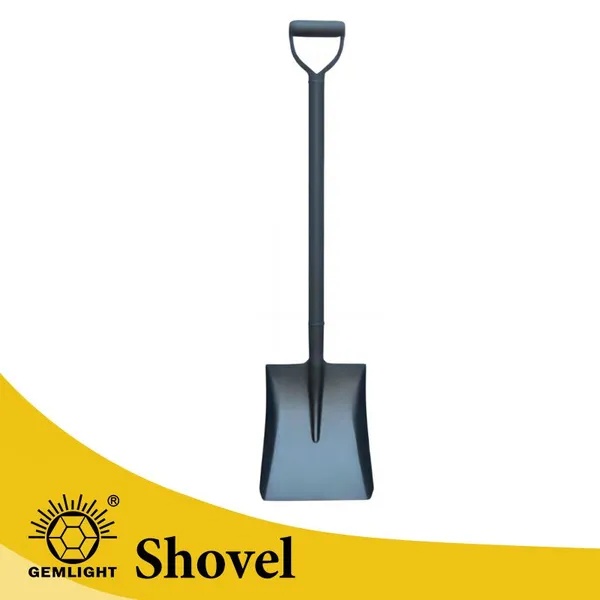
Farm Shovel Factory Supply for Regional Import Distributors Bulk Wholesale Supply for Garden Work and Trenching for Agricultural DealersUS$ 2.14 - 2.36MOQ: 1200 Pieces
-
Heavy Duty Garden Rake for African Importers OEM Factory Supply for Agricultural Use African Market Factory Bulk OrderUS$ 0.88 - 1.35MOQ: 2000 Pieces
-
Agricultural Soil Rake for Agricultural Dealers Export Supply for Garden Cleaning African Dealer Channels Factory Bulk OrderUS$ 0.88 - 1.35MOQ: 2000 Pieces
-
Manual Farm Machete for African Importers OEM Factory Supply for Farming and Land Clearing Durable Hand ToolNegotiableMOQ: 1200 Pieces
-
Large Heavy Duty Carbon Steel Garden Landscaping Digging HoeUS$ 1.07 - 1.27MOQ: 1200 Pieces
-
Heavy Duty Rail Steel Mattock Pick Axe With Wooden Handle for Digging Soil Mining and Agricultural Tool SupplierUS$ 1.85 - 2.3MOQ: 1200 Pieces
-
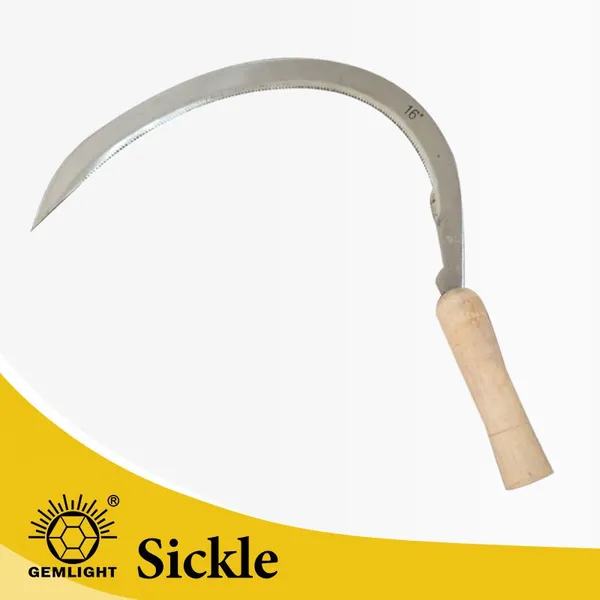
Forged Farm Sickle With Sharp Blade for African Importers OEM Bulk Order Support for Harvesting and Smallholder Farming for WholesalUS$ 0.28 - 0.33MOQ: 3000 Pieces
-
Strong Carbon Steel Farming Sickle for Uganda Tanzania Zambia Agricultural Tool DistributorsUS$ 0.34 - 0.47MOQ: 3000 Pieces